•    
    +91 7483 238 060
  • enquiry@padholeekho.com

Category Archives: GENERAL STUDIES & GK

Pakistan commission rejects Imran Khan’s bid to overturn election ban

Pakistan commission rejects Imran Khan’s bid to overturn election ban

Former prime minister is barred from standing in elections after being jailed for unlawfully selling state gifts while in office

Pakistan’s election body has rejected former prime minister Imran Khan’s nomination to contest the 2024 national elections in two constituencies, officials and his party’s media team said on Saturday.

The 71-year-old former cricket star has been embroiled in a tangle of political and legal battles since he was ousted as prime minister in April 2022. He has not been seen in public since he was jailed for three years in August for unlawfully selling state gifts while in office from 2018 to 2022.

Khan was disqualified from contesting the national elections scheduled for 8 February because of the corruption conviction, but he nevertheless filed nomination papers for the elections on Friday, his media team said.

In a list of rejected candidates from Lahore, the election commission of Pakistan said Khan’s nomination was rejected because he was not a registered voter of the constituency and because he was “convicted by the court of law and has been disqualified”.

His media team said the commission had also rejected his nomination to contest the elections in his home town, Mianwali.

Khan, who is widely seen as the country’s most popular leader, says he is being targeted by the military, which wants to keep him out of the polls. The military denies this.

Last week, a high court refused to suspend Khan’s disqualification from contesting the elections.

In addition to Khan, the election commission has also rejected nomination papers submitted by other senior party members, including Shah Mahmood Qureshi, vice-chairman of Khan’s party, the Pakistan Tehreek-e-Insaf (PTI).

Meanwhile, the election commission accepted former prime minister Nawaz Sharif’s nomination from two constituencies for the 2024 elections, weeks after a court overturned two graft convictions.

But Sharif still needs a life ban on holding any public office to be removed to qualify to stand, so it was not immediately clear how his nomination was accepted. A hearing on that ban will be held in January.

Sharif was banned from running in elections in 2017 by the supreme court, which declared him dishonest for not disclosing income from a company owned by his son.

Sharif, who arrived back home in October from four years of self-imposed exile in Britain, is bidding for a fourth premiership in the February elections. His biggest challenge will be to wrest back his support base from Khan.


Source:- https://www.theguardian.com/world

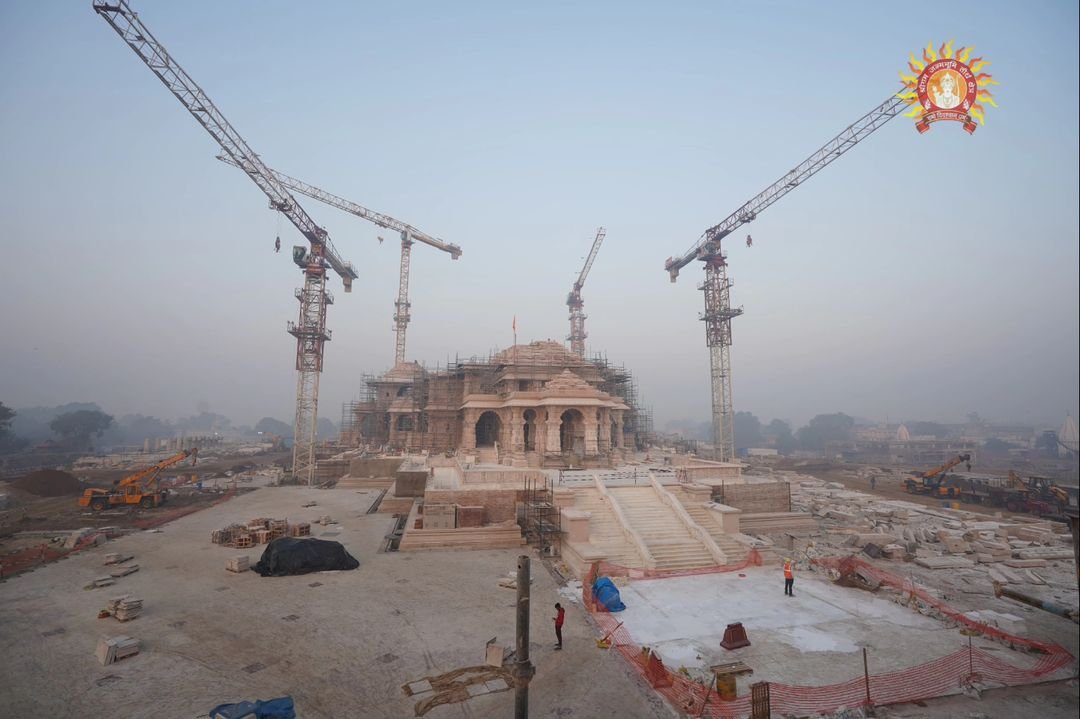
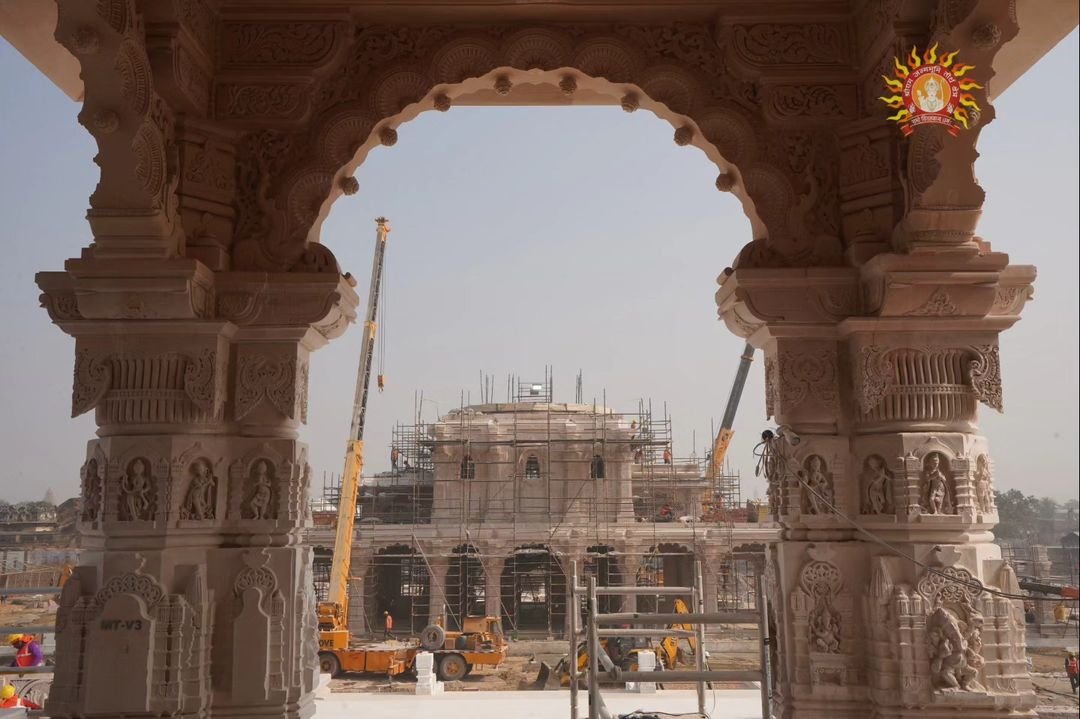
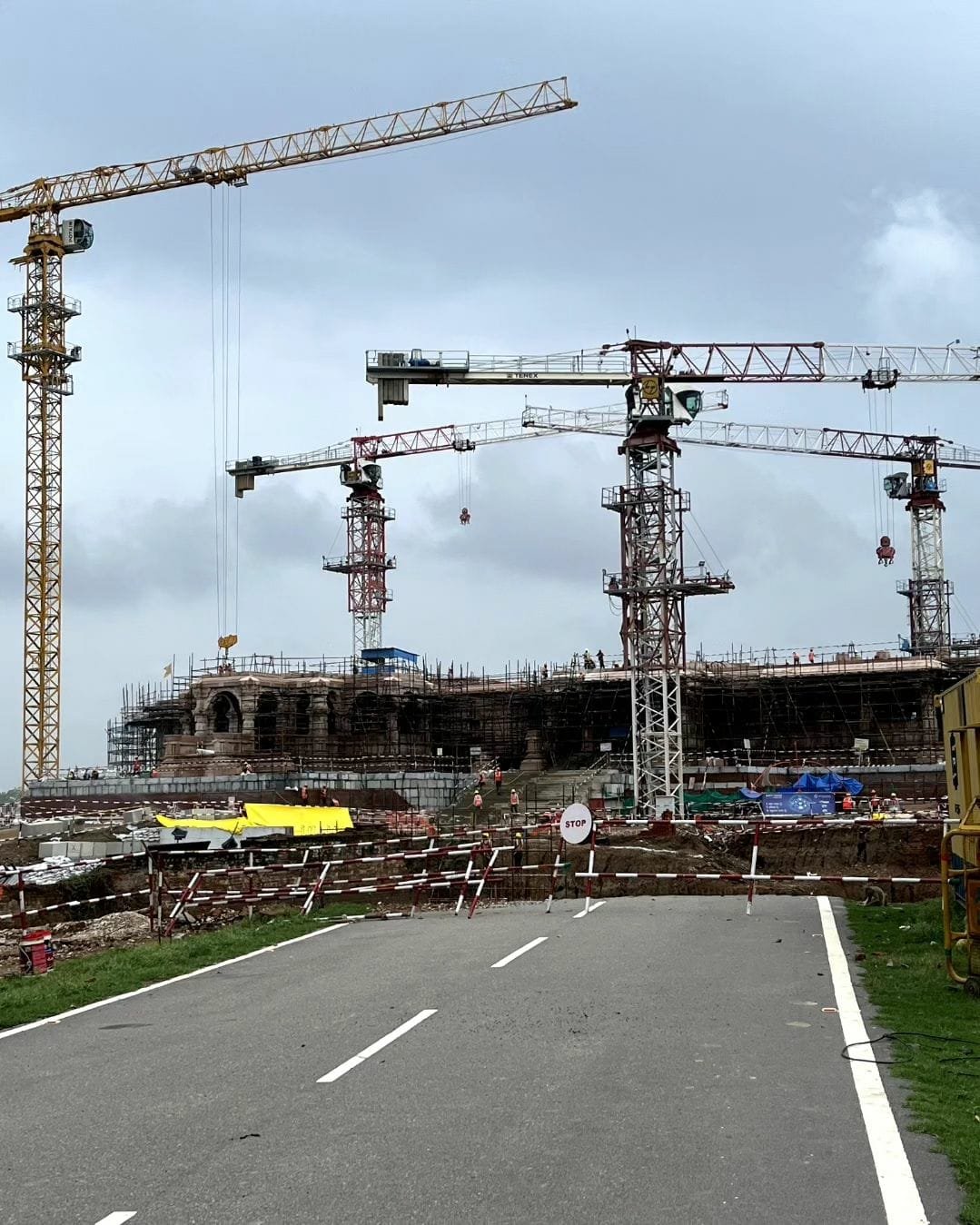
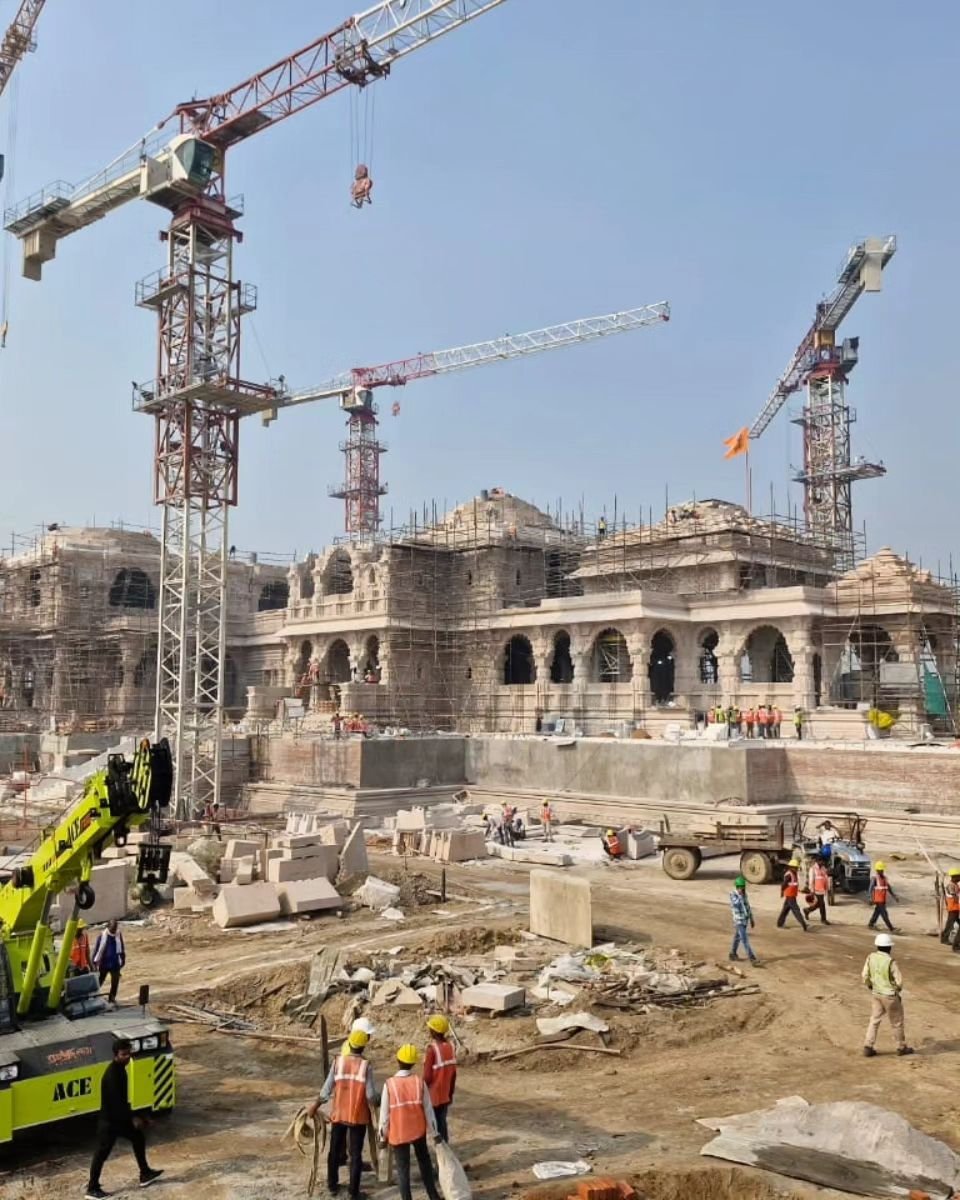
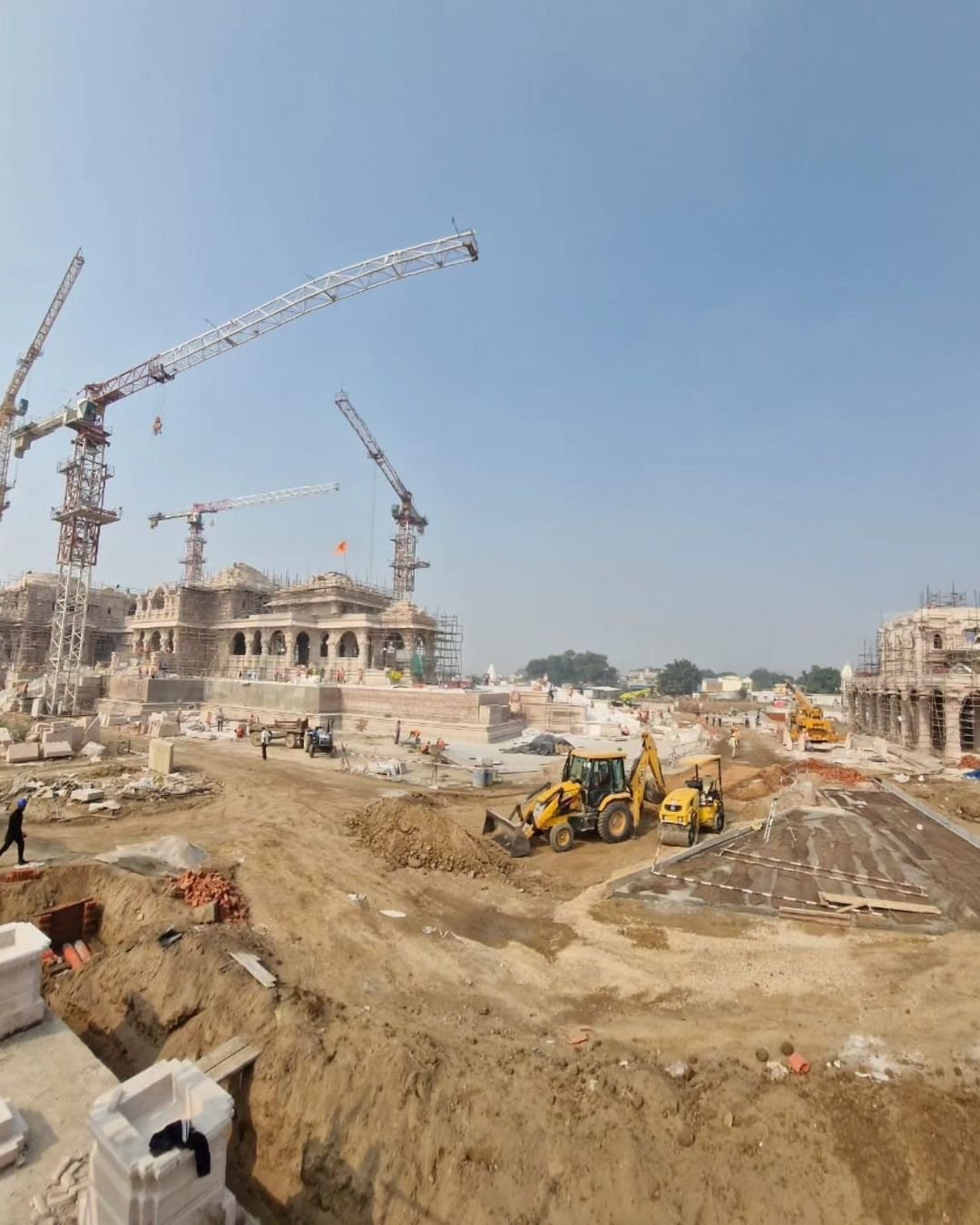
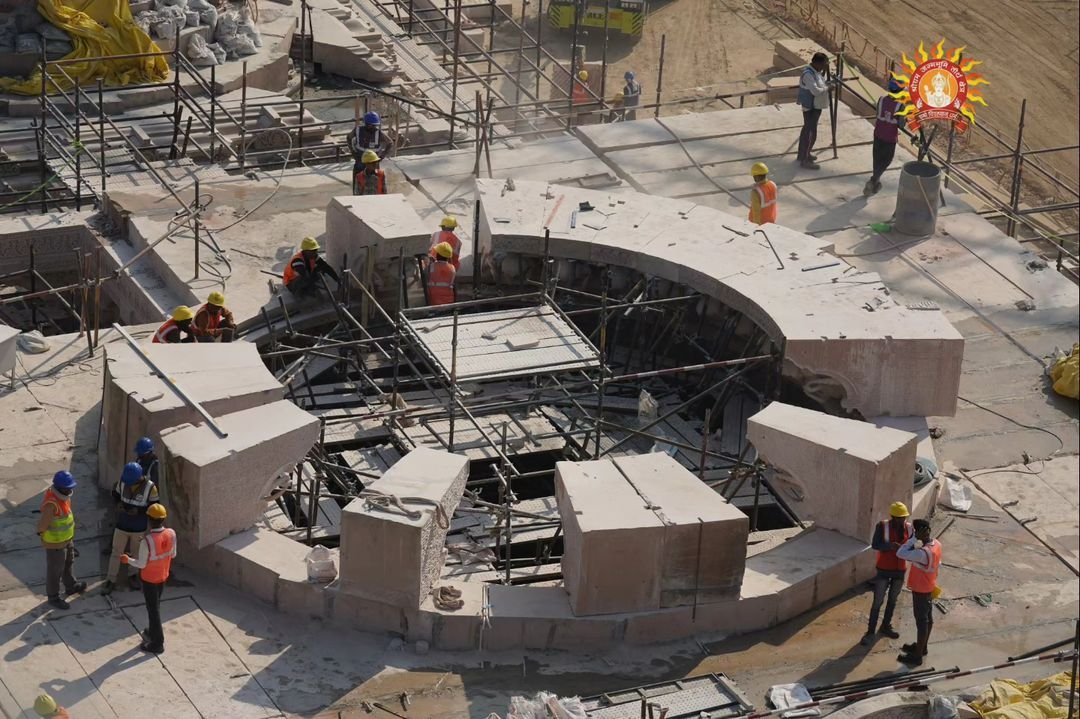
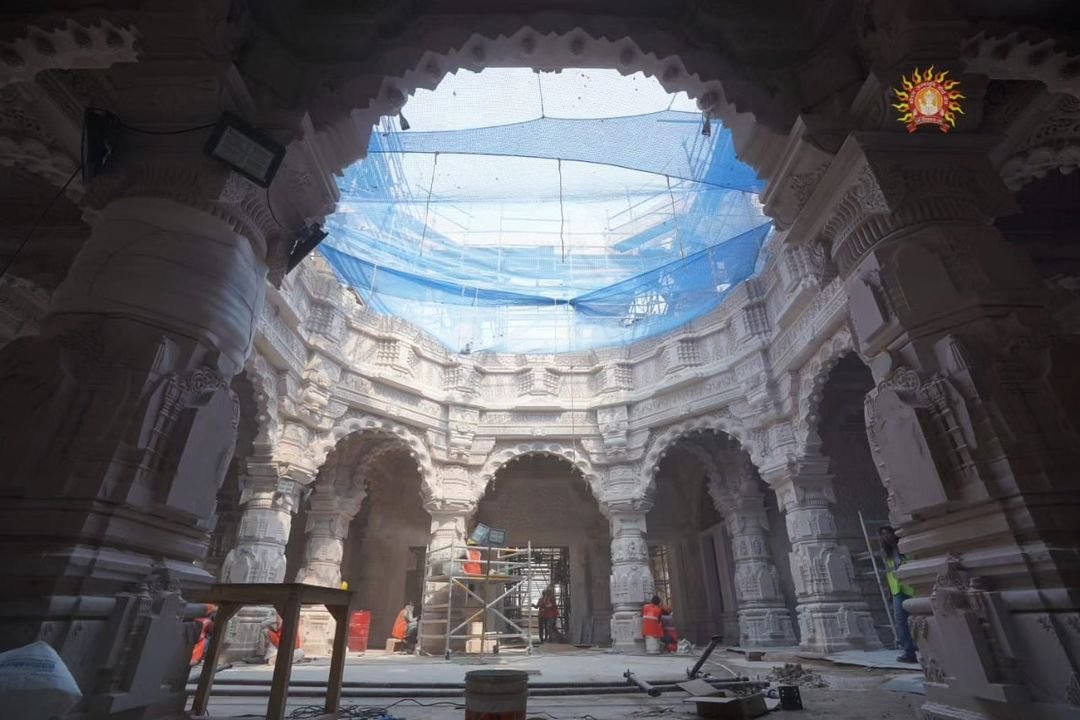
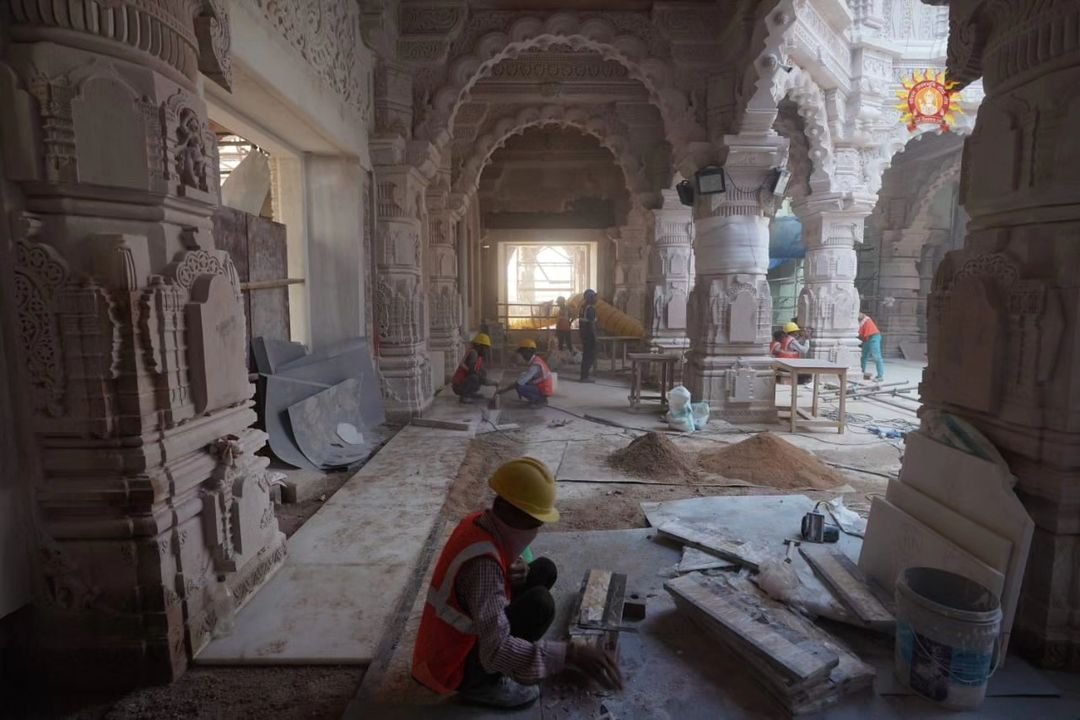
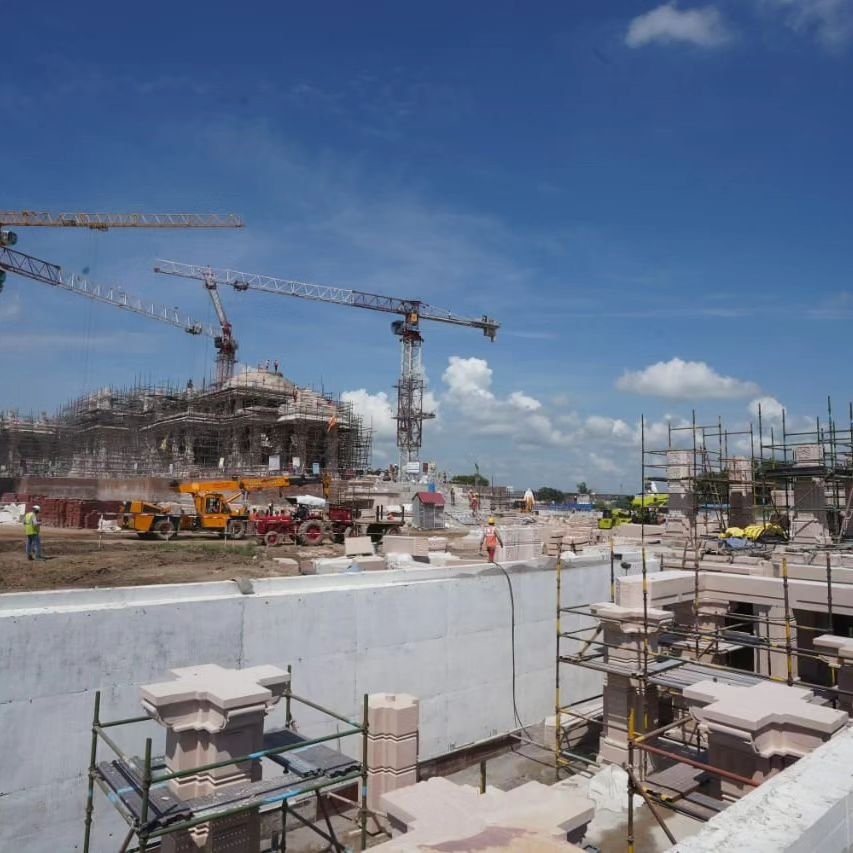
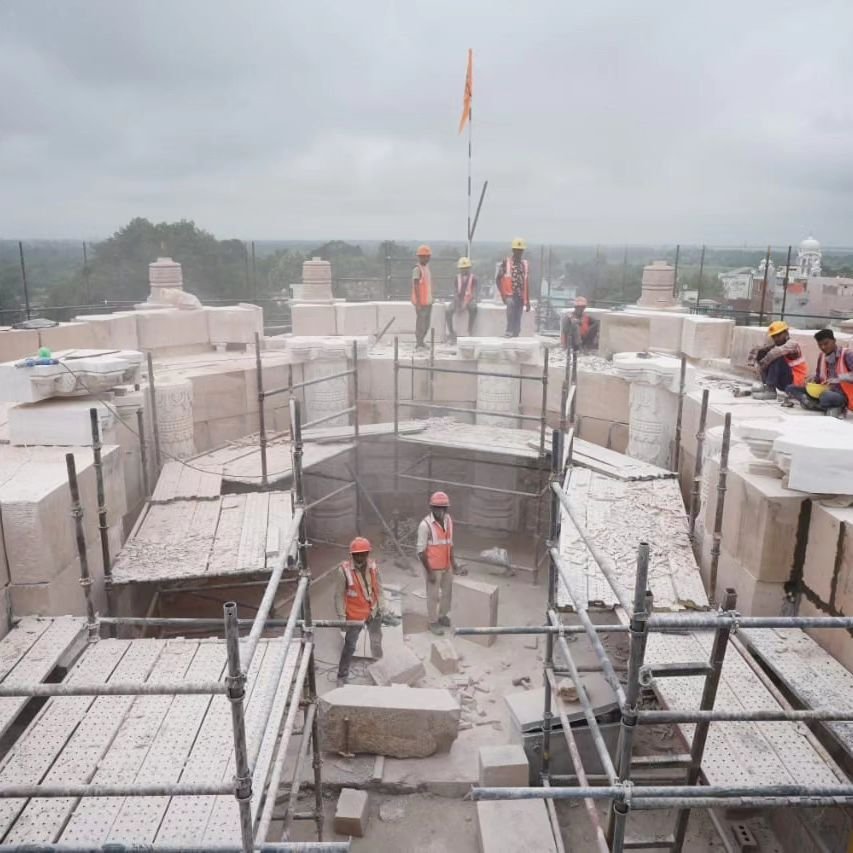
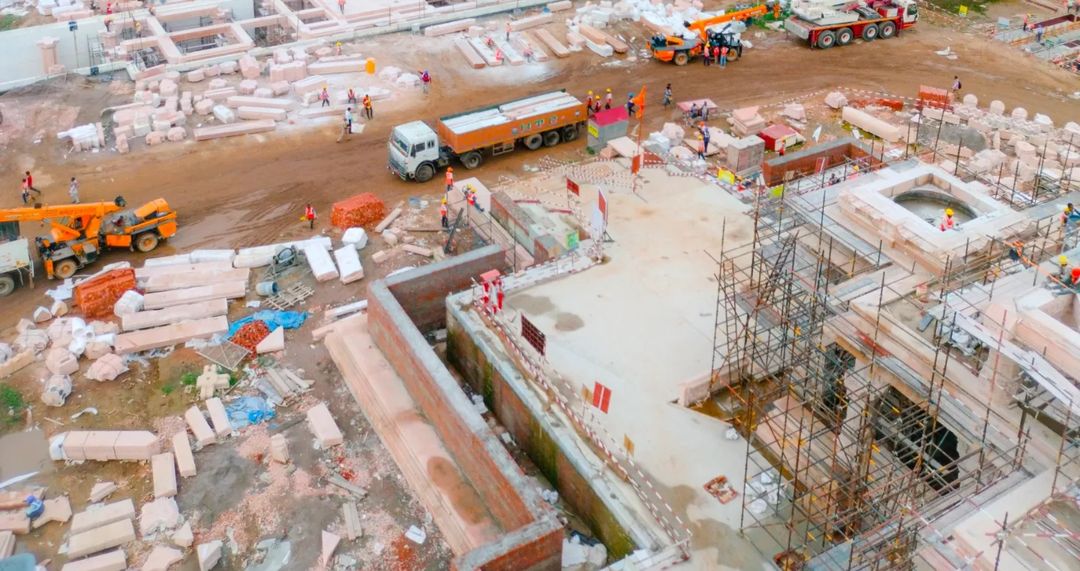
Ayodhya Ram Mandir- Know Everything

Everything you need to know about Ayodhya Ram Mandir

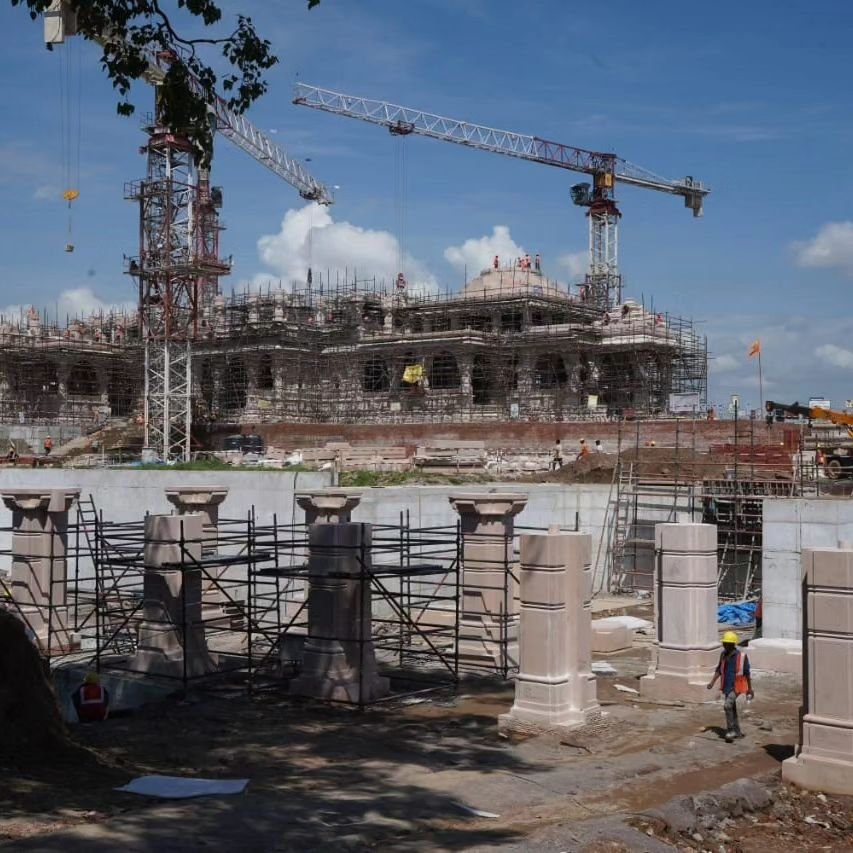
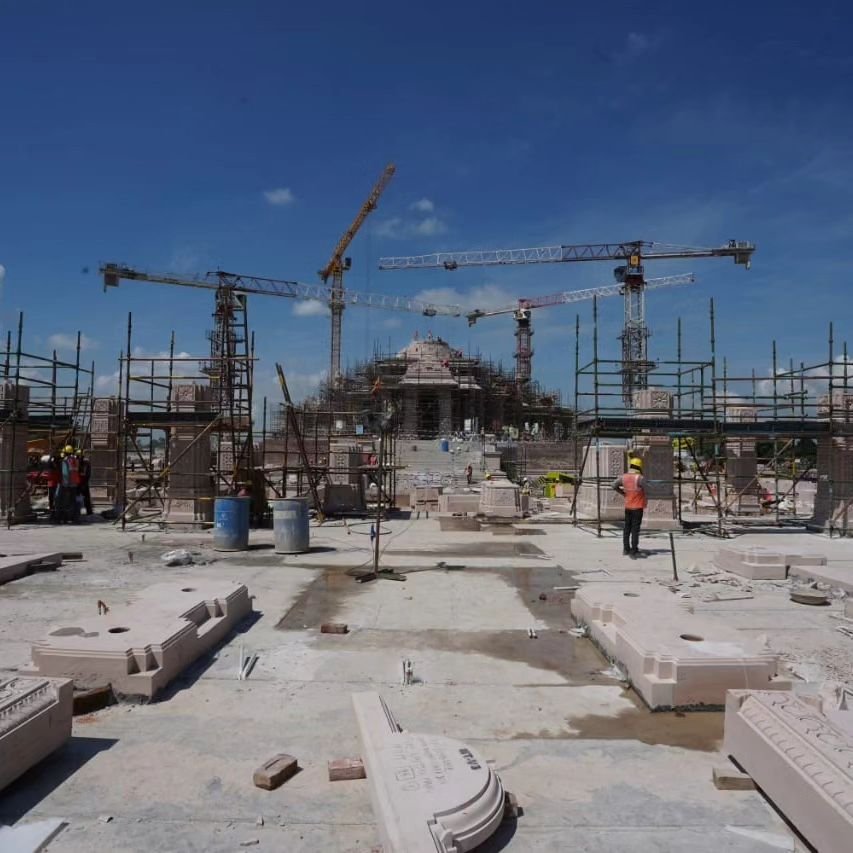
Prime minister Narendra Modi will inaugurate the Ayodhya Ram Temple on January 22, 2024. During the pran-partisha (consecration) ceremony, the idol of Ram Lalla will be installed in the sanctum- sanctorum (garbha-griha) of the temple. Devotees on the other hand will be allowed entry to the grand temple from January 24.

Table of Contents

Ayodhya Ram Mandir: Background

One of the biggest temples to be built in India after Independence, the Ayodhya Ram Temple is touted to be a combination of new-age technological conveniences and age-old Indian traditions.

Between 1528 and 1529, the Babri Masjid was built by the Mughal emperor Babur. However, members of the Hindu community also sought possession of the site, claiming it to be the birthplace of Lord Ram. The site subsequently became a disputed site and a long, legal battle ensued. Ending the title dispute on November 9, 2019, the Supreme Court accepted the 2.77 acres of disputed location as the birthplace of Lord Ram, paving the way for the construction of the Ram Mandir.

Ayodhya Ram Mandir foundation stone-laying ceremony

After the SC verdict, prime minister Narendra Modi performed the Bhumi Poojan ceremony on August 5, 2020, and laid the foundation stone of the temple.

Ayodhya Temple area and capacity

Spanning 54,700 sq ft, the temple area covers nearly 2.7 acres of land. The entire Ram Mandir Complex would be spread over nearly 70 acres and will be equipped to host about a million devotees at any time.

Ayodhya Ram Temple: Agency overseeing construction

The Shri Ram Janmabhoomi Teerth Kshetra Trust is supervising the temple’s construction.

Ayodhya Mandir: Estimated cost and funding

The construction work of the temple is likely to take between Rs 1,400 crore to Rs 1,800 crore. The temple trust is receiving between Rs 60-70 lakh in donations for building the grand temple, officials of the Ram Janmabhoomi Teerth Kshetra Nyas say.

Ayodhya Ram Mandir: Building material

Bansi Paharpur Sandstone

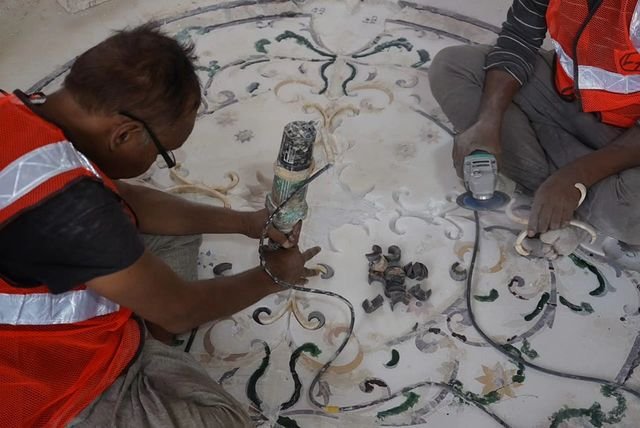
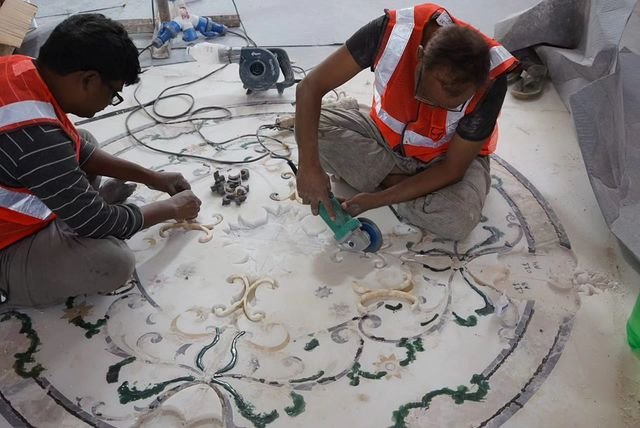
The superstructure of the Ram Mandir will be made of carved Rajasthan Bansi Paharpur stone, the rare pink marble stones, world-renowned for its beauty and strength. It will require a total of 4 lakh sq ft of stone.

The Bansi Paharpur Sandstone is found in the Bayana Tehsil of Bharatpur District in Rajasthan and it is available in hues of pink and red. The centre, in 2021, gave an in-principal approval to convert 398 hectares of protected forest land into revenue land to allow the mining of the pink sandstone in the vicinity of the Band Baretha Wildlife Sanctuary in Bharatpur, reversing the ban on mining put in place in 2016.

The Bansi Pahadpur Sandstone has been used in various grand structures of the country, including the Akshardham Temple, the Parliament Complex and the Lal Quila of Agra. Steel or bricks would not be used in the construction of the Ram Mandir.

Ayodhya Ram Mandir: Builders

While Larsen & Toubro are responsible for building the main structure, Tata Consultancy Engineers Ltd would develop the allied facilities.

Ayodhya Ram Mandir: Interior

Specifications

The upcoming temple is 360 ft long, 235 ft wide and 161 ft high. In height, the temple will three times the height of existing structure n the old city.

Style

The temple is designed by chief architect, Chandrakant Bhai Sompura, whose grandfather, Prabhakarji Sompura, had designed the Somnath Temple, along with his son, Ashish Sompura. The 79-year-old architect was appointed in 1992. Sompura mentioned that the Ram Mandir is being built in the Nagara style, following the principles of Vastu Shastra. The entrance on the east would be built in the Gopuram style, which represents the temples of the south. The walls of the temple would display artworks depicting the life of Lord Ram.

Shape

The sanctorum of the mandir would be octagonal-shaped, while the structure perimeter would be circular.

Floors

The mandir will have five domes and one tower with a height of 161 ft. The 3-floor temple will have a centre – Garbh Griha – built to allow sun rays to fall on the idol of Ram Lalla, the infant embodiment of the Lord. Like the sanctorum, the Griha Mandap would be fully covered, while the Keertan Mandap, the Nritya Mandap, the Rang Mandap and the two Prarthana Mandaps on each side would be open areas.

Ram Lalla idol

There will be two idols of Lord Ram. One will be the actual idol found in 1949 and has been in the tent for decades. The other will be a huge statue which will be visible from a long distance, says Jagdish Afle, project manager of the ram Mandir construction work.

The temple bell

A 2,100-kg bell for the Ram Temple is being brought from Etah, a well-known destination for bell manufacturing in India. The 6-ft tall and 5-ft wide bell would cost Rs 21 lakh.

Doors and window

To build the windows and doors, Teak wood (Sagwan) has been procured from Maharashtra’s Chandrapur. Not an ordinary wood, Teak has a life span of over 100 years. Work on building the grand doors and windows is expected to start between June 26 and 30 after a ceremonial ritual.

Ayodhya Ram Mandir: Lifespan

The grand structure is being built to have a lifespan of over 1,000 years. “Each material, which is being used…each design and drawing that is being used…is being done in IIT Chennai. They are the initiators. That is then tested by L&T and TCE. Finally, we have given the stability test for this agenda of 1,000 years to the Central Research Building Institute. The CRBI has tested the entire load that will come onto the structure through simulations. In short, we are dependent on the best brains of this country. There is just one objective – how to make this temple durable for 1,000 years and unique,” Nripendra Misra, the chairman of the Shri Ram Janmabhoomi Teerth Kshetra Trust’s temple construction committee, said.

Number of pilgrims to Ayodhya Ram Mandir   

Over 50,000 people visit the temple every day. This number is expected to increase to 100,000 once the temple is inaugurated.

Ayodhya Ram Mandir: Timeline

1528-1529: Mughal emperor Babur builds Babri Masjid

1850s: Start of communal violence over the land

1949: Ram Idol found inside the mosque, intensifying communal tension

1950: Two suits filed in Faizabad civil court seeking permission to worship the idol

1961: UP Sunni Central Wakf Board demands the removal of the idol

1986: District Court opens the site for Hindu worshippers

1992: Babri masjid demolished on December 6

2010: Allahabad HC rules three-way division of disputed area among Sunni Waqf Board, Nirmohi Akhara and Ram Lalla

2011: SC stays Allahabad HC order

2016: Subramanian Swamy files plea in SC, seeks the construction of Ram Temple

2019: SC accepts Ayodhya was the birthplace of Lord Ram, hands over the entire 2.77 acres of disputed land to the trust and orders the government to give 5-acre land to Sunni Waqf Board as an alternate site

2020: PM Modi performs Bhumi Poojan and lays the foundation stone

How to reach Ayodhya?

Air: You can book flights to the Ayodhya Airport from every major Indian city. The airport is conveniently connected to the city centre through the modes of taxi and auto rickshaws.

Road: Ayodhya is well-connected by road to nearby cities and towns. You can hire a taxi or use public transportation like buses to reach Ayodhya from nearby locations. The airport is located approximately 8-10 km from the city centre.

Train: The nearest major railway station to Ayodhya is the Ayodhya Junction. From there, you can take a taxi or an auto-rickshaw to reach Ayodhya Airport. The distance is around 6-8 km.

Ayodhya Ram Mandir: Impact on real estate 

Land rates in and around Ayodhya have risen by up to 10 times in the past decade, property dealers and brokers active in the area inform.

“Land bought for lakhs in the city before the announcement of the temple construction overnight became crore-worthy after the Supreme Court verdict. With big developers showing interest in property here, rates have gone up further, brining the city on a par with state capital Lucknow, to say the least,” says Lal Babu Pandey, an Ayodhya resident who worked only as a part-time property dealer earlier.

The interest in land is now so much that that it has turned into a full-time occupation for me and is enough to support my family, informs Pandey.

To find a land parcel within a radius of 5-10 km of the temple a buyer will have to spend at least Rs 2,000 per square foot while rates might go as high as Rs 18,000 per square foot. Prices for commercial plots start at Rs 4,000 per square foot, and can go up to Rs 20,000 per square foot. In some pockets, the rate for one biswa of land is now over Rs 60 lakh which used to be Rs 5 lakh till 2018.

Latest photos of Ayodhya Ram Mandir

ayodhya-ram-mandir-everything-you-need-to-know

ayodhya-ram-mandir-everything-you-need-to-know


ayodhya-ram-mandir-everything-you-need-to-know


ayodhya-ram-mandir-everything-you-need-to-know


ayodhya-ram-mandir-photos


ayodhya-ram-mandir-photos


ayodhya-ram-mandir-photos


ayodhya-ram-mandir-photos


ayodhya-ram-mandir-photos


ayodhya-ram-mandir-photos


Ayodhya Ram Temple consecration ceremony to be held on Jan 22, PM to attend

Ayodhya Ram Temple consecration ceremony to be held on Jan 22, PM to attend


Ayodhya Ram Temple consecration ceremony to be held on Jan 22, PM to attend


Ayodhya Ram Temple consecration ceremony to be held on Jan 22, PM to attend

Views of Ram Mandir Sinh Dwar; carvings on Nritya Mandap

Devotees to get 20 seconds for Ram Lalla darshan at Ayodhya Ram Mandir


Devotees to get 20 seconds for Ram Lalla darshan at Ayodhya Ram Mandir


Devotees to get 20 seconds for Ram Lalla darshan at Ayodhya Ram Mandir


Devotees to get 20 seconds for Ram Lalla darshan at Ayodhya Ram Mandir


Shri Ram Janmabhoomi Mandir Garbha Gruh Aarati Darshan

Ayodhya Ram Temple consecration ceremony to be held on Jan 22


Ayodhya Ram Temple consecration ceremony to be held on Jan 22


Ayodhya Ram Temple consecration ceremony to be held on Jan 22


Ayodhya Ram Temple consecration ceremony to be held on Jan 22


UP deputy shares latest photos of Ayodhya Ram Mandir


UP deputy shares latest photos of Ayodhya Ram Mandir


UP deputy shares latest photos of Ayodhya Ram Mandir

FAQs

Who is the owner of the Ram Mandir land?

The Shri Ram Janmabhoomi Tirth Kshetra Trust is the owner of the Ram Mandir land.

Which company will be building the Ram Mandir?

L&T is building the Ram Mandir.

How long will it take to build the Ram Mandir?

The temple is expected to be opened to devotees by January 2024.


Source:- https://housing.com/news

2023: A Strange, Tumultuous Year in Sustainability

2023: A Strange, Tumultuous Year in Sustainability

The year 2023 contained several important sustainability narratives and trends. The author outlines three key ones — the anti-ESG movement, China’s acceleration of a clean economy, and the rise of reporting regulations — and then suggests a series countervailing forces pushing against each. He also outlines several smaller stories that leaders need on their radar as well.

This was a rough year. The world’s biggest challenges generally got worse, or at least more complicated. Our biggest existential threat, climate change, is no longer a scientific model of the future; it’s now a relentless daily challenge. This year, yet again, heat records were shatteredwildfires and dangerous air spread over unprecedented areas, and flooding and storms destroyedthousands of lives. Even the (seemingly) world’s most powerful woman, Taylor Swift, had to postpone a concert in Brazil because of the heat. Scientists tell us that we’ve pushed the planet beyond its ability to support us in critical areas such as availability of water, biodiversity, and, of course, carbon emissions.

The good news is that even though we’re not moving fast enough, sustainability in business is mainstream — a must-do, not a nice-to-do. With both significant bad and good news, I’m frequently asked if I’m optimistic or pessimistic. I can’t answer that easily. The forces driving companies toward sustainability are relentless … yet we’re not doing enough and some powerful counter-pressures are in play. I see duality. As a society, we are winning (more companies doing more than ever) and losing (emissions and inequality still rising). As the clean economy grows, or human rights and equality get more attention, those who do not want these changes also work to slow progress. So, my core takeaway from the year is that there’s a yin-yang of interconnected, opposing forces.

So, let’s look at three themes in sustainability from 2023 that really dwarf other stories. One side of the tug-of-war generally has an advantage — and it leans toward more sustainability and more clean tech — but none of these trends were unobstructed.

1. The Anti-ESG Movement Plagues Companies

This was the biggest topic in sustainable business by far, even as we struggled to clearly define “ESG.” To me, ESG — which stands for environmental, social, and governance — is mostly a term used by the financial world to look at the risk to companies from environmental and social issues. It’s not the broader idea of sustainability, which covers the role of business in society and its contribution to a thriving world. But the terms got conflated, with ESG opponents using it as “a proxy for opposition to the spread of ‘liberal values,’” as the then-head of sustainability for the financial services firm Morningstar pointed out. Anti-ESG is an American creation, and it has a number of flavors, but I heard discussions of it all over the world.

It’s influence played out in a number of ways. Some companies and brands — like M&Ms, Target, and Bud Light — faced firestorms of protest for actions critics found too “woke,” and took heat for their often awkward responses. Most famously, the governor of Florida kept battling one of the world’s most beloved brands, Disney, over the company’s position on state laws targeting the LGBTQ+ community. CEO Bob Iger hit back, calling the attacks “anti-business” and thencancelled a $1 billion office development.

In response to a significant amount of talk in the media and amongst employees on these issues, many companies decided to go silent, embracing a sustainability word-of-the-year, “green hushing.”

On the other hand…

There’s been a bit of a waning of anti-woke rhetoric on the U.S presidential campaign trail, and the significant amount of noise does not seem to be derailing action. A Bloomberg Intelligence surveyfound that the “trend of increasing focus on ESG by both businesses and investors … appears to remain intact.” The report found that three quarters of executives think the benefits of ESG are worth the increased risk of scrutiny. Around 90% of investors felt ESG was mainstream, part of their fiduciary duty, and helped them make better decisions.

Some in the investment community even pushed back on anti-ESG laws — partly because, as one analysis concluded, those state laws could cost taxpayers $708 million. Banks are also making more money from loans and underwriting to clean energy than to fossil fuels. One memorable headline read, “Morgan Stanley Doubles Down on ESG Despite the Politics.”

Other coverage of company action found plenty continuing their work on sustainability, even in states that are hostile to it. For examples, South Carolina steel-maker Nucor is working to make low-carbon steel and set a goal for net zero across value chain by 2050.

The reality is that there wouldn’t be such powerful backlash if there weren’t real progress. On some level, it doesn’t matter too much if companies speak less as long as they continue to do the hard work of decarbonizing and tackling inequality. But it is a concern, as it might make it less likely they will work on the larger, systemic problems we need to solve. It’s hard to collaborate if you don’t talk. The silence should lessen. Some corporate leaders are just changing language — BlackRock CEO Larry Fink says he’ll stop using the “weaponized” term ESG (but the firm kept launching ESG funds).

2. China Leads the World to Clean Economy Tipping Points

The year in clean tech started with the amazing news that the world had spent more than $1 trillion on green tech, which topped investment in fossil fuels for the first time. And the International Energy Agency, which has been underestimating the growth of clean tech for decades, now sees the light, describing an “unstoppable” energy transition. Many regions and countries accelerated their efforts; for example, the EU is banning sales of new internal combustion engine cars by 2035 and calling for a phase-out of fossil fuels. And France banned short-haul domestic flights in favor of trains.

Great news all around. But it was China that blew everyone away. In what may be the single biggest sustainability headline of the year, China’s national oil company, Sinopec, said the country had reached peak gasoline demand (in part by radically increasing sales of EVs). Some analysts believe China may have peaked in total carbon emissions already. The country was on track to add 150 gigawatts of solar this year (versus adding 87 gigawatts in 2022), more than the total capacity in the U.S. And in a rare positive moment in U.S.-China relations, the countries agreed to ramp up renewables. If all the estimates are true, it’s a monumental and fundamental shift in global energy and transportation systems — which has enormous ripples for many gargantuan value chains. And it goes directly against the persistent myth that “China isn’t doing anything” on climate.

On the other hand…

As critics point out, China is permitting more coal plants, but this can get misconstrued. (People say to me that China is building two plants per week when, in reality, many don’t get built.) The new plants are much cleaner, it’s generally backup power, and China is also cancelling and shelving plants rapidly as well.

There are more important countervailing forces, including some indication that exponential growth rates of some techs, like solar, may slow in 2024 due to supply-chain issues. But more pressing is the swing toward conservative leaders globally, which generally correlates with being pro-fossil fuels and actively anti-renewables. For example, Mexico has been making renewables projects much harder and pushing fossil fuels. The UK retreated on some climate policies, like delaying a ban on combustion engines in cars to 2035.

And the global climate summit in Dubai, COP28, included the meeting president (and CEO of the UAE’s national oil company) sounding like a climate denier. Fossil fuel interests now dominate COP, and they’ve inserted into the discussions the language of “abated emissions” — i.e., you can keep burning fossil fuels if you can capture the carbon (a big if). The final language of the COP28 agreement seems to support a fossil fuel phase-out, but we’ll see. We’ve also seen some serious citizen pushback in a number of countries to policies that are perceived to raise the cost of living.

There’s also increasing concern about one aspect of the clean tech transition: There are problematic working conditions in the mining supply chain for clean-economy metals like lithium and cobalt. These are real concerns that should be addressed. The clean tech transition is necessary for our thriving and survival, but we must simultaneously address human rights issues that have plagued all forms of energy. As part of this work, the U.S. and EU are working to secure sourcing under better conditions, as well as sourcing more broadly than from just China.

Finally, I want to note the persistent myth that EVs are “just as bad” as (or worse than) fossil-fuel cars in terms of carbon emissions because of a) the energy needed to make a battery-powered vehicle, and b) the fact that it’s often plugged into a dirty grid. Yes, of course EVs have a footprint, but they are much more efficient users of energy and they are a key part of a systemic solution, including cleaning up the grid. This is a much longer conversation, but the short version is that the footprint of a combustion and oil-based transportation system is wildly higher than a battery and electricity-based one.

3. Rising Requirements and Regulations for Reporting

The biggest tactical discussion about sustainability in business is focused on reporting. It’s wonky and unsexy, but rising regulations covering “non-financial” reporting are creating a lot of work and stress for companies. Most of the attention is focused on the requirements measure and report on carbon emissions — both their own and, increasingly, their suppliers’ and customers’ as well (called “Scope 3” emissions). But these new rules also demand discussion of impacts on water, biodiversity, human rights, and more.

It’s a fundamental shift in what companies have to measure and disclose, and the EU is leading the charge. The European Sustainability Reporting Standards (ESRS) and Corporate Sustainability Reporting Directive (CSRD) create new sustainability reporting obligations for an estimated 50,000 companies. Multinationals, even if headquartered outside the EU, realize they must prepare as well.

But the EU is just one player. In 2023, new laws in Canada and Germany, for example, will require that companies report on the emissions and targets for their supply chains. As a country, California would be the fifth largest economy in the world, so its two climate-related disclosure bills have an enormous impact. One bill, the Climate Corporate Data Accountability Act, requires any company operating in the state (with more than $1 billion in revenue) to disclose their GHG emissions as well as Scope 3 emissions. Almost all of these new bills also hold companies to extensive standards of climate reporting, most notably the guidelines provided by the Task Force on Climate-Related Financial Disclosures (TCFD).

On the other hand…

These are laws, so they’re not exactly optional, but pushback, or at least some nuance, is growing. The alphabet soup of regulations and guidelines is not easy to navigate, so companies are raising important concerns about how, for example, they can gather Scope 3 data from suppliers that may not have it. Also, data and tracking are good things, but it’s possible that extensive reporting is getting in the way of real action by sucking the air out of the room. I’ve seen internal data from consultants that have surveyed sustainability executives on their priorities. In 2022, the top issue was integrating sustainability with strategy, which is what we want to see. Now, the top concern is about how to answer all the new requirements.

The way out of this morass is partly about dedicating enough resources. Companies need more people working on ESG and sustainability reporting. But in parallel, I also hear companies making the case that we shouldn’t seek perfection anyway — after all, precise Scope 3 data is going to be hard to come by (and actually non-existent further up supply chains — picture a small apparel company in China that does not have tracking systems on carbon emissions or human rights). Many aspects of financial statements are estimated today (for example, goodwill on the balance sheet), so some leeway on sustainability data should be expected.

A conservative-led quasi-rebellion against ESG, the continued explosion of clean tech, and the rise of new, detailed sustainability regulations — these are the big three stories of the year in corporate sustainability. Of course, many other things are going on. So, here’s a rapid-fire list of other areas that caught my attention and will likely become much bigger stories in the next year or two.

  • Emissions-heavy industries — the so-called “hard to abate” sectors like cement, steel, and aluminum — are starting to turn the ship. Extensive partnerships to develop low/no-carbon manufacturing technologies, growing commitments from buyers to guarantee revenue (like this “green steel” buying network), and new financing approaches (such as the Sustainable Aluminum Finance Framework) are proliferating.
  • Company positions on policycontinue to get scrutiny, as there’s a clear disconnect for many between their own big goals and what they, or their trade associations, lobby for.
  • Insurance companiesare starting to bail on places hit hard by climate-enhanced weather, like State Farm discontinuing new home insurance policies in California because of wildfires.
  • Consumers may finally become a force for sustainability. A fascinating McKinsey study shows that products with ESG claims on packaging experienced faster sales growth.
  • Engaging Gen Z stakeholders directly in sustainability and activism (versus leaving them to despair about their future; consider the shocking data on how more than half are not planning to have kids, in part because of climate change) is a rising topic. One cool example: Puma’s “Voices of a Re:Generation” program brought in some young influencers to help guide their sustainability thinking.
  • The value of nature — i.e., the many trillions of dollars of services it provides society and business, as well as our very existence — has always been hard to quantify precisely, but efforts continue. In 2023, we saw the development of the Taskforce on Nature-related Financial Disclosures.
  • Living wages, a critical element of fighting inequality (especially in supply chains), are unfortunately nearly nonexistent in large companies, according to a Just Capital study (but I remain optimistic that this is shifting).

In total, the tipping points are clear. But countries and companies are not on track to hit net zero targets as fast as science requires. The overall story remains one of a crooked path to inevitable change. A cleaner, more just economy and world is being born, but it’s not going to be smooth sailing. I remind myself that resistance is just a sign that sustainability is winning. Onward to 2024.


Source:- https://hbr.org/2023

The Dark Side of Solar Power

The Dark Side of Solar Power

Summary.   Solar energy is a rapidly growing market, which should be good news for the environment. Unfortunately there’s a catch. The replacement rate of solar panels is faster than expected and given the current very high recycling costs, there’s a real danger that all.. 

It’s sunny times for solar power. In the U.S., home installations of solar panels have fully rebounded from the Covid slump, with analysts predicting more than 19 gigawatts of total capacity installed, compared to 13 gigawatts at the close of 2019. Over the next 10 years, that number may quadruple, according to industry research data. And that’s not even taking into consideration the further impact of possible new regulations and incentives launched by the green-friendly Biden administration.

Solar’s pandemic-proof performance is due in large part to the Solar Investment Tax Credit, which defrays 26% of solar-related expenses for all residential and commercial customers (just down from 30% during 2006–2019). After 2023, the tax credit will step down to a permanent 10% for commercial installers and will disappear entirely for home buyers. Therefore, sales of solar will probably burn even hotter in the coming months, as buyers race to cash in while they still can.

Tax subsidies are not the only reason for the solar explosion. The conversion efficiency of panels has improved by as much as 0.5% each year for the last 10 years, even as production costs (and thus prices) have sharply declined, thanks to several waves of manufacturing innovation mostly driven by industry-dominant Chinese panel producers. For the end consumer, this amounts to far lower up-front costs per kilowatt of energy generated.

This is all great news, not just for the industry but also for anyone who acknowledges the need to transition from fossil fuels to renewable energy for the sake of our planet’s future. But there’s a massive caveat that very few are talking about.

Panels, Panels Everywhere

Economic incentives are rapidly aligning to encourage customers to trade their existing panels for newer, cheaper, more efficient models. In an industry where circularity solutions such as recycling remain woefully inadequate, the sheer volume of discarded panels will soon pose a risk of existentially damaging proportions.

To be sure, this is not the story one gets from official industry and government sources. The International Renewable Energy Agency (IRENA)’s official projections assert that “large amounts of annual waste are anticipated by the early 2030s” and could total 78 million tonnes by the year 2050. That’s a staggering amount, undoubtedly. But with so many years to prepare, it describes a billion-dollar opportunity for recapture of valuable materials rather than a dire threat. The threat is hidden by the fact that IRENA’s predictions are premised upon customers keeping their panels in place for the entirety of their 30-year life cycle. They do not account for the possibility of widespread early replacement.

Our research does. Using real U.S. data, we modeled the incentives affecting consumers’ decisions whether to replace under various scenarios. We surmised that three variables were particularly salient in determining replacement decisions: installation price, compensation rate (i.e., the going rate for solar energy sold to the grid), and module efficiency. If the cost of trading up is low enough, and the efficiency and compensation rate are high enough, we posit that rational consumers will make the switch, regardless of whether their existing panels have lived out a full 30 years.

As an example, consider a hypothetical consumer (call her “Ms. Brown”) living in California who installed solar panels on her home in 2011. Theoretically, she could keep the panels in place for 30 years, i.e., until 2041. At the time of installation, the total cost was $40,800, 30% of which was tax deductible thanks to the Solar Investment Tax Credit. In 2011, Ms. Brown could expect to generate 12,000 kilowatts of energy through her solar panels, or roughly $2,100 worth of electricity. In each following year, the efficiency of her panel decreases by approximately one percent due to module degradation.

Now imagine that in the year 2026, halfway through the life cycle of her equipment, Ms. Brown starts to look at her solar options again. She’s heard the latest generation of panels are cheaper and more efficient — and when she does her homework, she finds that that is very much the case. Going by actual current projections, the Ms. Brown of 2026 will find that costs associated with buying and installing solar panels have fallen by 70% from where they were in 2011. Moreover, the new-generation panels will yield $2,800 in annual revenue, $700 more than her existing setup when it was new. All told, upgrading her panels now rather than waiting another 15 years will increase the net present value (NPV) of her solar rig by more than $3,000 in 2011 dollars. If Ms. Brown is a rational actor, she will opt for early replacement. And if she were especially shrewd in money matters, she would have come to that decision even sooner — our calculations for the Ms. Brown scenario show the replacement NPV overtaking that of panel retention starting in 2021.

If early replacements occur as predicted by our statistical model, they can produce 50 times more waste in just four years than IRENA anticipates. That figure translates to around 315,000 metric tonnes of waste, based on an estimate of 90 tonnes per MW weight-to-power ratio.

Alarming as they are, these stats may not do full justice to the crisis, as our analysis is restricted to residential installations. With commercial and industrial panels added to the picture, the scale of replacements could be much, much larger.

The High Cost of Solar Trash

The industry’s current circular capacity is woefully unprepared for the deluge of waste that is likely to come. The financial incentive to invest in recycling has never been very strong in solar. While panels contain small amounts of valuable materials such as silver, they are mostly made of glass, an extremely low-value material. The long life span of solar panels also serves to disincentivize innovation in this area.

As a result, solar’s production boom has left its recycling infrastructure in the dust. To give you some indication, First Solar is the sole U.S. panel manufacturer we know of with an up-and-running recycling initiative, which only applies to the company’s own products at a global capacity of two million panels per year. With the current capacity, it costs an estimated $20–$30 to recycle one panel. Sending that same panel to a landfill would cost a mere $1–$2.

The direct cost of recycling is only part of the end-of-life burden, however. Panels are delicate, bulky pieces of equipment usually installed on rooftops in the residential context. Specialized labor is required to detach and remove them, lest they shatter to smithereens before they make it onto the truck. In addition, some governments may classify solar panels as hazardous waste, due to the small amounts of heavy metals (cadmium, lead, etc.) they contain. This classification carries with it a string of expensive restrictions — hazardous waste can only be transported at designated times and via select routes, etc.

The totality of these unforeseen costs could crush industry competitiveness. If we plot future installations according to a logistic growth curve capped at 700 GW by 2050 (NREL’s estimated ceiling for the U.S. residential market) alongside the early-replacement curve, we see the volume of waste surpassing that of new installations by the year 2031. By 2035, discarded panels would outweigh new units sold by 2.56 times. In turn, this would catapult the LCOE (levelized cost of energy, a measure of the overall cost of an energy-producing asset over its lifetime) to four times the current projection. The economics of solar — so bright-seeming from the vantage point of 2021 — would darken quickly as the industry sinks under the weight of its own trash.

Who Pays the Bill?

It will almost certainly fall to regulators to decide who will bear the cleanup costs. As waste from the first wave of early replacements piles up in the next few years, the U.S. government — starting with the states, but surely escalating to the federal level — will introduce solar panel recycling legislation. Conceivably, future regulations in the U.S. will follow the model of the European Union’s WEEE Directive, a legal framework for the recycling and disposal of electronic waste throughout EU member states. The U.S. states that have enacted electronics-recycling legislation have mostly cleaved to the WEEE model. (The Directive was amended in 2014 to include solar panels.) In the EU, recycling responsibilities for past (historic) waste have been apportioned to manufacturers based on current market share.

A first step to forestalling disaster may be for solar panel producers to start lobbying for similar legislation in the United States immediately, instead of waiting for solar panels to start clogging landfills. In our experience drafting and implementing the revision of the original WEEE Directive in the late 2000s, we found one of the biggest challenges in those early years was assigning responsibility for the vast amount of accumulated waste generated by companies no longer in the electronics business (so-called orphan waste).

In the case of solar, the problem is made even thornier by new rules out of Beijing that shave subsidies for solar panel producers while increasing mandatory competitive bidding for new solar projects. In an industry dominated by Chinese players, this ramps up the uncertainty factor. With reduced support from the central government, it’s possible that some Chinese producers may fall out of the market. One of the reasons to push legislation now rather than later is to ensure that the responsibility for recycling the imminent first wave of waste is shared fairly by makers of the equipment concerned. If legislation comes too late, the remaining players may be forced to deal with the expensive mess that erstwhile Chinese producers left behind.

But first and foremost, the required solar panel recycling capacity has to be built, as part of a comprehensive end-of-life infrastructure also encompassing uninstallation, transportation, and (in the meantime) adequate storage facilities for solar waste. If even the most optimistic of our early-replacement forecasts are accurate, there may not be enough time for companies to accomplish this alone. Government subsidies are probably the only way to quickly develop capacity commensurate to the magnitude of the looming waste problem. Corporate lobbyists can make a convincing case for government intervention, centered on the idea that waste is a negative externality of the rapid innovation necessary for widespread adoption of new energy technologies such as solar. The cost of creating end-of-life infrastructure for solar, therefore, is an inescapable part of the R&D package that goes along with supporting green energy.

It’s Not Just Solar

The same problem is looming for other renewable-energy technologies. For example, barring a major increase in processing capability, experts expect that more than 720,000 tons worth of gargantuan wind-turbine blades will end up in U.S. landfills over the next 20 years. According to prevailing estimates, only five percent of electric-vehicle batteries are currently recycled — a lag that automakers are racing to rectify as sales figures for electric cars continue to rise as much as 40% year-on-year. The only essential difference between these green technologies and solar panels is that the latter doubles as a revenue-generating engine for the consumer. Two separate profit-seeking actors — panel producers and the end consumer — thus must be satisfied in order for adoption to occur at scale.

None of this should raise serious doubts about the future or necessity of renewables. The science is indisputable: Continuing to rely on fossil fuels to the extent we currently do will bequeath a damaged if not dying planet to future generations. Compared with all we stand to gain or lose, the four decades or so it will likely take for the economics of solar to stabilize to the point that consumers won’t feel compelled to cut short the life cycle of their panels seems decidedly small. But that lofty purpose doesn’t make the shift to renewable energy any easier in reality. Of all sectors, sustainable technology can least afford to be shortsighted about the waste it creates. A strategy for entering the circular economy is absolutely essential — and the sooner, the better.

Source:- https://hbr.org/2021

BJP win in 2024

BJP win in India’s 2024 general election ‘almost an inevitability’

Concerns raised over what a third term for Narendra Modi would mean for the country amid rising Hindu-Muslim tension

India’s prime minister, Narendra Modi, has cut a confident figure in recent weeks. As his Bharatiya Janata party (BJP) swept three major state elections in December, Modi did not hold back from predicting that “this hat-trick has guaranteed the 2024 victory”.

It was a sign that with less than six months to go before the general election, in which Modi will be seeking a third term in power, campaign season has begun with gusto.

In India’s current political landscape, the consensus among political analysts is that a win for Modi and the BJP is the most plausible outcome.

The prime minister’s popularity as a political strongman, alongside the BJP’s Hindu nationalist agenda, continues to appeal to the large Hindu majority of the country, particularly in the populous Hindi belt of the north, resulting in the widespread persecution of Muslims.

At state and national level, the apparatus of the country has been skewed heavily towards the BJP since Modi was elected in 2014. He has been accused of overseeing an unprecedented consolidation of power, muzzling critical media, eroding the independence of the judiciary and all forms of parliamentary scrutiny and accountability and using government agencies to pursue and jail political opponents.

A shopkeeper displays rings with BJP and Indian National Congress party symbols.
A shopkeeper displays rings with BJP and Indian National Congress party symbols. Photograph: Reuters

While regional opposition to the BJP is strong in pockets of south and east India, nationally it is seen as fragmented and weak.The main opposition Indian National Congress party won the state election in Telangana this month but is in power in only three states overall and is perceived as hierarchical and riddled with infighting.

The recently formed coalition of all major opposition parties – which goes by the acronym INDIA – has yet to unite on crucial issues, though it has vowed to fight the BJP collectively.

“The general sense is that a BJP win is almost an inevitability at this stage,” said Neelanjan Sircar, a fellow at the Centre for Policy research. “The question is more: what factors will shape the scale of the victory?”

The BJP has begun a nationwide pre-election push. A roadshow, titled Viksit Bharat Sankalp Yatra, will see thousands of government officers deployed to towns and villages across the country over the next two months, tasked with speaking about the BJP’s successes over the past nine years – despite criticisms of politicizing government bureaucracy and resources for campaigning purposes.

The Ministry of Defence is also setting up 822 “selfie points” at war memorials, defence museums, railway stations and tourist attractions where people can take photos of themselves with a Modi cutout.

The BJP’s recent domination in the states of Rajasthan, Madhya Pradesh and Chhattisgarh appeared to reaffirm the popularity of Modi. Though the prime minister has little to do with state elections, which are designed to elect local assembly members, the BJP strategically put Modi front and Centre of their campaigns in the place of local leaders, where he appeared at dozens of rallies to directly appeal to voters and present himself as the embodiment of the party.

Modi’s messaging in these campaign speeches combined an emphasis on the BJP’s paternalistic welfare schemes – which provide large amounts of free food and cash handouts – with nationalistic and religiously communal rhetoric, offering a glimpse of how the BJP intends to fight the election on a national scale.

Modi’s role in elevating India as a global power – be that in international politics or in the recent its moon landing in August – it was the first country to successfully land a spacecraft near the lunar south pole – was also prominent.

A member of the public in Andhra Pradesh watches the launch of the Chandrayaan-3 rocket to the moon.
A member of the public in Andhra Pradesh watches the launch of the Chandrayaan-3 rocket to the moon. Photograph: Idrees Mohammed/EPA

Asim Ali, a political scientist, said the recent state election campaigns in the north were “some of the most religiously polarising I have seen” as the BJP played heavily on Hindutva (Hindu nationalist) sentiments to win the majority vote.

In Rajasthan, Modi repeatedly evoked an incident where a Hindu tailor was murdered by extremist Muslims to claim that the opposition Congress party, which ruled the state, was “sympathetic to terrorists” and that it was their appeasement of Muslims that had led to the killing.

The BJP’s candidates included four Hindu priests, some with very hardline views, but no Muslims. In the tribal dominated state of Chhattisgarh, the BJP played on fears of forced conversions of tribal people away from Hinduism.

Modi was brought to power in 2014 largely on the back of an anti-incumbency wave while his re-election victory in 2019 was all but secured after India carried out airstrikes on Pakistan, after a terrorist incident a few months before the polls, resulting in a storm of national security sentiment in his favor.

However, whether the BJP will win the same sort of sweeping parliamentary majority it secured in 2019 is unclear. Its position in certain crucial states, such as Bihar and Maharashtra, is uncertain and the party’s weakness on economic problems, particularly jobs and inflation, could also affect voting.

Ali was among those who feared a Hindu-Muslim divide would be stirred up further to become “the dominant issue, at least in the Hindi heartland”.

“Hindu-Muslim communalization has become completely normalized, not just through political campaigning but by the television news channels and the messages people see on social media and WhatsApp,” said Ali. “It can be activated by the BJP at their grassroots at any time. Just one or two slogans from Modi and other senior BJP leaders, a few coded communal do whistles, and people get the message.”

Indeed, one of the biggest issues likely to dominate the BJP’s agenda pre-election is the long-awaited opening of the Ram Mandir, a grand Hindu temple that has been built in the place of a demolished mosque. Construction of the building, in the north Indian town of Ayodhya, has long been a focal point of the Hindu nationalist movement in India, and the fanfare around Modi’s inauguration of the temple later this month in January is expected to be a national event.

A man walks in front of posters of the 2019 Bollywood film PM Narendra Modi, a biopic on the Indian prime minister, in Mumbai.
Posters in Mumbai of the 2019 Bollywood film PM Narendra Modi, a biopic on the Indian prime minister. Photograph: Indranil Mukherjee/AFP/Getty Images

Baijayant Panda, national vice president of the BJP, said the party was very confident about the parliamentary elections. He credited the confidence in part to “the Modi premium”, which meant the BJP tended to perform better in national than state elections because of the “stratospheric popularity” of the prime minister.

“On the ground, there’s a huge surge of optimism, even in areas which we haven’t traditionally won,” said Panda. “Having had this kind of victory in the state elections completely cements our position.”

Exactly what a third term for Modi would mean for India, particularly if it was another outright majority, was a cause for concern among some analysts and human rights groups. While Panda said it would be defined by economic success, and India becoming the world’s third largest economy, others feared a continued erosion of democracy and the rights of the Muslim minority, who exceed 200 million.

Ashutosh Varshney, the director of the Center for Contemporary South Asia at Brown University in the US, said he expected the rights of Muslims to continue to come under attack.

He warned that a situation similar to the Jim Crow laws, which existed in southern American states in the late 19th and early 20th centuries and disenfranchised black people on the basis of race, could become a reality in India under a third Modi term.

“If Modi comes back to power we can imagine a scenario of a Jim Crow-style Hindu nationalist order in BJP-ruled states,” said Varshney. “It will establish Hindu supremacy, deprive Muslims of equality and create a secondary citizenship for Muslims, which will likely eventually remove their right to vote.”

Panda pushed back against allegations of BJP communalism. “I dare anyone to point out where a minority, whether a Muslim or a Christian or Buddhist or a Sikh has been discriminated against in the governance of India, you will not find a single example,” he said.


Source:- https://www.theguardian.com/

Amazing images of Universe

Amazing images from James Webb telescope, two years after launch

The James Webb Space Telescope (JWST) was launched to orbit just two years ago, but already it’s starting to redefine our view of the early Universe.

An image showing expanding shells of debris from Cas A, an exploded star

CASSIOPEIA A The expanding shells of debris from Cas A, an exploded star, or supernova. The main ring is about 15 light-years across.

Jupiter, the largest planet in the Solar System

JUPITER The largest planet in the Solar System, Jupiter, viewed in infrared light. The brightest features are at the highest altitudes – the tops of convective storm clouds.

Without really stretching its capabilities, the infrared observatory has been peering deep into the cosmos to show us galaxies of stars as they were up to 13.5 billion years ago.

A lot of them are brighter, more massive, and more mature than many scientists thought possible so soon after the Big Bang, which occurred 13.8 billion years ago.

“We certainly thought we’d be seeing fuzzy blobs of stars. But we’re also seeing fully formed galaxies with perfect spiral arms,” said Prof Gillian Wright.

“Theorists are already working on how you get those mature structures so early in the Universe. In that sense, Webb is really changing scientific thinking,” the director of the UK Astronomy Technology Centre told BBC News.

An image showing M51, the Whirlpool Galaxy

M51 The Whirlpool Galaxy can be seen in the night sky with just binoculars. Here, the most powerful space telescope ever launched uses its incredible capabilities to study the intricate spiral arms.

The Chameleon I molecular cloud

CHAMELEON I The Chameleon I molecular cloud is about 630 light-years from Earth. It’s here, at temperatures down to about -260C, that Webb has detected types of ice grains not previously observed.

An image showing Sagittarius C

SAGITTARIUS C Webb looks to the centre of our galaxy, close to where a supermassive black hole exists. This region of space contains tens of thousands of stars, including many that are birthing inside the bright pink feature at centre-left. The cyan colour highlights excited hydrogen gas.

And it’s not just the efficiency with which these early galaxies were able to form their stars that’s been a surprise, the size of their central black holes has been a marvel, too.

There’s a monster at the core of our Milky Way that’s four billion times the mass of our Sun. One theory suggests such behemoths are made over time by accreting lots of smaller holes produced as remnants from exploded stars, or supernovae.

“But the preliminary evidence from JWST is that some of these early giants may have completely bypassed the star stage,” said Dr Adam Carnall from the University of Edinburgh.

“There is a scenario where huge clouds of gas in the early Universe could have collapsed violently and just kept going, straight to being black holes.”

NGC 3256, the result of two galaxies crashing into each other

NGC 3256 This is what you get when two galaxies crash into each other, an event estimated to have occurred about 500 million years ago. The collision drives the formation of new stars that then illuminate the gas and dust around them.

The famous supernova remnant first recoded by Chinese astronomers in 1054

CRAB NEBULA The famous supernova remnant first recorded by Chinese astronomers in 1054. It’s located some 6,500 light-years from Earth in the constellation Taurus.

When James Webb was launched at Christmas 2021, it was thought it might have 10 years of operations ahead of it. The telescope needs its own fuel to maintain station 1.5 million km from Earth. But the flight to orbit on an Ariane rocket was so accurate, it’s estimated now to have fuel reserves for 20 years of life, if not longer.

This means, rather than racing through their observations, astronomers can afford take a more strategic approach to the telescope’s work.

“We thought we’d be skimming cream; we no longer need to do that,” said Dr Eric Smith, Webb’s programme scientist at the US space agency Nasa.

One activity that’s sure to accelerate is the practice of making “deep fields”. These are long stares at particular patches of sky that will allow the telescope to trace the light from the faintest and most distant galaxies. It’s how Webb is likely to spot the very first galaxies and possibly even some of the very first stars to shine in the Universe.

The famed ringed planet of Saturn

SATURN The famed ringed planet appears quite dark to Webb in this image because methane in the planet absorbs infrared light strongly. Three of Saturn’s moon are seen to the left.

A baby star launches energetic jets from both poles

HH212 A baby star, no more than 50,000 years old, launches energetic jets from both poles that light up the molecular hydrogen in pink. The entire structure is 1.6 light-years across.

The Hubble telescope famously expended many days just looking at a single corner of the cosmos. “I don’t think we’ll need the hundreds of hours of exposure that Hubble used, but I do think we’ll need multiple deep fields,” said Dr Emma Curtis-Lake from the University of Hertfordshire.

“We’ve already had some quite long exposures with JWST and we’re seeing quite a lot of variation. So, we can’t put everything into one teeny-tiny area because there’s no guarantee we’ll find something super-exciting.”

JADES-GS-z13-0, the earliest confirmed galaxy

JADES The JWST Advanced Deep Extragalactic Survey, otherwise known as Jades, has the earliest confirmed galaxy, called JADES-GS-z13-0, which is observed at just 325 million years after the Big Bang.

Star Cluster IC 348

STAR CLUSTER IC 348 Wispy filaments of gas and dust stream between a cluster of bright stars. Webb found the lowest mass brown dwarf, or “failed star”, in this image – an object about three to four times the mass of our Jupiter.

The Space Telescope Science Institute’s Dr Massimo Stiavelli dreams of spotting a star that is primordial – that has the signature of the original chemistry that emerged from the Big Bang; that hasn’t been polluted with elements that were forged only later in cosmic history.

“We’ll need to see them as supernovae, when they explode,” the head of the Webb mission office said.

“To achieve this, we need to start looking at the same patches year after year to catch them before and just after they go off. They’ll be extremely rare and we’ll need to be very lucky.”

Earendel, the most distant single star ever observed

EARENDEL The most distant single star observed to date is called Earendel. James Webb confirmed its light has taken 12.9 billion years to reach us. Its light has been boosted by the gravity of foreground galaxies.

The famous Orion Nebula star forming region

ORION NEBULA The famous star forming region can just about be seen by the naked eye as a smudge on the sky. It would take a spaceship travelling at light-speed a little over four years to traverse this Webb scene.

Marvel at the extraordinary collection of James Webb pictures on this page – from the most distant reaches of the Universe to the nearby familiar objects in our own Solar System.

It’s amazing to think that imaging isn’t actually the telescope’s majority workload.

More than 70% of its time is spent doing spectroscopy. That’s sampling the light from objects and slicing it up into its “rainbow” colours. It’s how you retrieve key information about the chemistry, temperature, density and velocity of the targets under study.

“You could think of Webb as a giant spectrograph that takes the occasional nice picture,” joked Dr Smith.

The cloud complex Rho Ophiuchi

RHO OPHIUCHI This cloud complex is the nearest star forming region to Earth, being just 400 light-years away. The star lighting up the white cavity is just a few million years old.

Source:-https://www.bbc.co.uk/

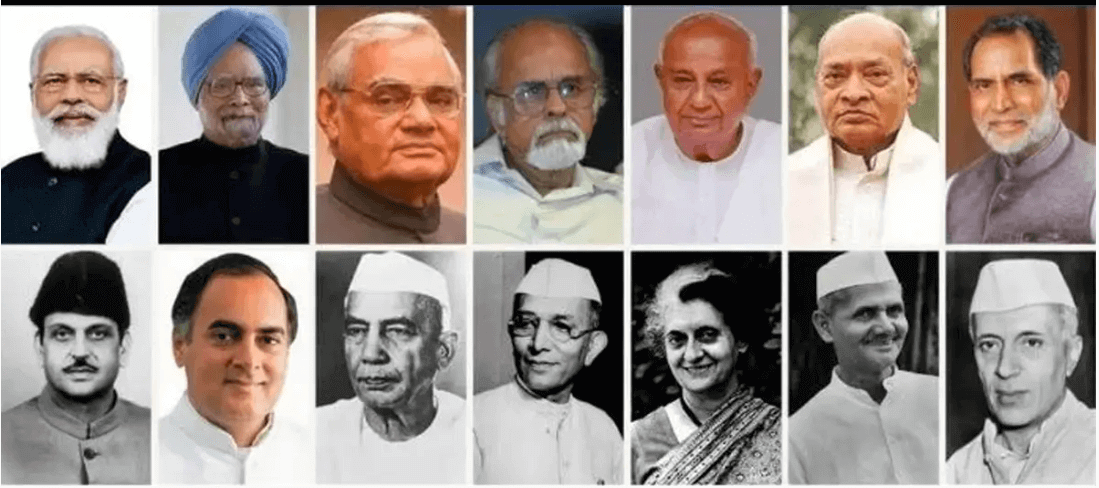
List of Prime Ministers of India from 1947 to 2023

List of Prime Ministers of India from 1947 to 2023 

List of Prime Ministers of India: In India, the head of state is the President, whose powers are largely nominal and ceremonial. The Prime Minister of India is the head of the government. He is appointed by the President after a political party win a general election and nominates a candidate for the post. The leader of that political party is thereafter appointed as the Prime Minister of India. Effective executive power rests with the Council of Ministers, headed by the prime minister, who is chosen by the majority party or coalition in the Lok Sabha ( Lower House of Parliament) and is appointed by the president of India. Check the chronologically ordered list of the prime ministers in the table below, from the earliest to the most recent.

pm-of-india

List of Prime Ministers of India: Overview

The Prime Minister of India is the chief executive of the Government of India. Some important points asked in various exams are given below.

  1. Jawaharlal Nehru was the first Prime minister of India. He is also India’s longest-serving prime minister.
  2. Indira Gandhi was the first Woman Prime minister of India.
  3. Rajiv Gandhi was sworn in as India’s youngest Prime minister of India.
  4. Manmohan Singh is the first Sikh Prime minister of India.
  5. Narendra Damodardas Modi is the current Prime minister of India (14th).

Prime Minister of India List 1947 to 2023

Jawahar Lal Nehru, the first prime minister of India was appointed on 15th August 1947 and Narendra Damodardas Modi is the current prime minister of India. Check the List of Prime Ministers of India from 1947 to 2023 in the table below.

                           Prime Minister of India from 1947 to 2023
Prime Minister Name Period
Jawahar Lal Nehru 15 Aug 1947 to 27-May-1964
Gulzarilal Nanda 27 May 1964 to 9 June 1964
Lal Bahadur Shastri 09-Jun-1964 to 11-Jan-1966
Gulzarilal Nanda 11-Jan-1966 to 24 January 1966
Indira Gandhi 24-Jan-1966 to 24-Mar-1977
Morarji Desai 24-Mar-1977 to 28-Jul-1979
Charan Singh 28-Jul-1979 to 14-Jan-1980
Indira Gandhi 14-Jan-1980 to 31-Oct-1984
Rajiv Gandhi 31-Oct-1984 to 02-Dec-1989
Vishwanath Pratap Singh 02-Dec-1989 to 10-Nov-1990
Chandra Shekhar 10-Nov-1990 to 21-Jun-1991
P. V. Narasimha Rao 21-Jun-1991 to 16-May-1996
Atal Bihari Vajpayee 16-May-1996 to 01-Jun-1996
H. D. Deve Gowda 01-Jun-1996 to 21-Apr-1997
Atal Bihari Vajpayee 19-Mar-1998 to 22-May-2004
Dr. Manmohan   Singh 22-May-2004 to 26-May-2014
Narendra Damodardas Modi 26-May-2014  to Incumbent

Narendra Damodardas Modi (2014-Incumbent)

Narendra Modi as the prime minister of the Republic of India is elected as the head of the government. He is the leader of the Lower House (Lok Sabha) and is also the head of the Council of Ministers. Prime Minister Narendra Modi is the 14th Prime Minister of India. Serving his second tenure, PM Modi was first elected in 2014 to the 16th Lok Sabha. Check below the list of the prime ministers preceding him.

Manmohan Singh (2004-2014)

Dr. Manmohan Singh was the 13th prime minister of India. He has served two complete terms as the prime minister and headed United Progressive Alliance (UPA) governments two times. A member of the Rajya Sabha, Manmohan Singh was the leader of the upper house from 1998 to 2004. He is currently serving his sixth Rajya Sabha tenure. He is widely accredited for the 1991 LPG ( Liberalizations, Privatizations, Globalizations ) reforms in India as the finance minister in PV Narasimha Rao government. Manmohan Singh was also the 15th governor of the Reserve Bank of India. He is the 1987 recipient of the Padma Vibhushan.

Atal Bihari Vajpayee (1996, 1998-99, 1999-2004)

Atal Bihar Vajpayee has served three terms as the Prime Minister of India. He was first elected as the 10th Prime Minister of India and served for a period of 13 days only. A popular prime minister, Atal Bihari Vajpayee was conferred with the highest civilian award, Bharat Ratna, in 2014. He gave the slogen “Jai jawaan, Jai Kisaan, Jai Vigyan”. Vajpayee was the minister of External Affairs minister in Morarji Desai government and is remembered for his contributions in bettering the Indo-Pakistan ties. Elected 10 times to the Lok Sabha, he was also a two time member of the Rajya Sabha from 1962-67 and 1986-91. He was among the founding members of the Bharatiya Jana Sangh that later became the Bharatiya Janata Party of which Vajpayee was the first president. The Pokhran 2 nuclear tests in 1988 were held under his tenure. Born on Christmas Day, December 25, his birthday is marked in India as the Good Governance Day.

Inder Kumar Gujral (1997-1998)

The 12th prime minister of India, I K Gujral was a participant of the Quit India Movement under Gandhi Ji leader ship. As the minister of external affairs, he is remembered for the Gujral Doctrine – a set of five principles to guide the foreign policy of India with its immediate neighbours, particularly Pakistan. He was both a Rajya Sabha member and a Lok Sabha member.

HD Deve Gowda (1996-1997)

Haradanahalli Doddegowda Deve Gowda, the 11th Indian PM, had held the office of the Karnataka chief minister from 1994 to 1996. Deve Gowda was chosen as the prime minister when no party had won enough seats to form the government and the United Front formed the government with Congress support. The national president of the Janata Dal ( Secular ), Deve Gowda was the member of the 14th, 15th and 16th Lok Sabha after his term as the prime minister.

PV Narasimha Rao (1991-1996)

Pamulaparthi Venkata Narasimha Rao, the 10th prime minister, was the first PM to come from southern India. Narasimha Rao served as the defence minister from 1993-96 and the minister of external affairs from 1992 to 1994. He was also the home minister under Rajiv Gandhi in 1986. Narasimha Rao was also the 4th chief minister of Andhra Pradesh. The 1991 economic reforms were brought under his tenure as the PM.

Chandra Shekhar (1990-1991)

The eighth Indian Prime Minister, Chandra Shekhar, headed a minority government of a Janata Dal breakaway faction with the support of the Congress to delay the election process. With the least number of party MPs, his government was regarded as the ‘lame duck’. The 1991 economic crisis and the assassination of Rajiv Gandhi were two key events during his tenure.

VP Singh (1989-1990)

Vishwanath Pratap Singh was the seventh prime minister of India. A Congressman, VP Singh was the 12th chief minister of Uttar Pradesh. From 1984 to 1987, he was the minister of finance and from 1989-90, the minister of defence under PM Rajiv Gandhi when the Bofors scandal surfaced. The Mandal Commission Report for reservation in government posts / educational institutions was implemented in his tenure.

Rajiv Gandhi (1984-89)

The sixth prime minister of India and the son of preceding PM Indira Gandhi and Feroze Gandhi, Rajiv Gandhi served from 1984 to 1989. He took office on the day of the assassination of Indira Gandhi in 1984 after the Sikh riots and at age 40 was the youngest PM of India. Rajiv Gandhi served as a pilot for the Indian Airlines. From 1985-91, he was the president of the Congress party. His term was marked by prominent cases such as that of Shah Bano, the Bhopal gas tragedy and the Bofors scandal. He was assassinated by a LTTE suicide bomber in 1991 at age 46 and was posthumously awarded the Bharat Ratna.

Chaudhary Charan Singh (1979-80)

C Charan Singh was the fifth prime minister of India. Born in a peasant family in Uttar Pradesh, Charan Singh was the champion of peasants rights.

Morarji Desai (1977-79)

The fourth Prime Minister of India was Morarji Ranchhodji Desai. He was the chief minister of the Bombay state, from 1952 to 1956, that was partitioned into Maharashtra and Gujarat. He led the government formed by the Janata Party.

Indira Gandhi (1966-1977, 1980-1984)

The third Prime Minister of India, Indira Priyadarshini Gandhi, also the first and so far the only woman prime minister of India, served the second-longest term as a prime minister. Indira Gandhi also served as the minister of external affairs (1984), minister of defence (1980 – 82), minister of home affairs (1970 – 73) and minister of information and broadcasting (1964 – 66). She imposed the 1975 state emergency to suspend elections. The 1971 war with Pakistan for the liberation of East Pakistan was held during her term in office. Following Operation Blue Star, she was assassinated in 1986 by her own bodyguard.

Gulzarilal Nanda (1964, 1966)

Gulzarilal Nanda took office in 1966 following the death of Lal Bahadur Shastri for 13 days as the acting prime minister of India. His earlier 13-day stint as the second prime minister of India followed the death of prime minister Jawaharlal Nehru in 1964.

Lal Bahadur Shastri (1964-1966)

Congressman Lal Bahadur Shastri was the second prime minister of India. He came up with the slogan of ‘Jai Jawan Jai Kisan’ that became popular during the 1965 Indo-Pakistan war and served as the Railways minister under Jawaharlal Nehru. His died the day following the Tashkent Agreement that formally ended the war.

Jawaharlal Nehru (1947-1964)

Jawaharlal Nehru was the first and longest-serving prime minister of India. He was a leading figure in the Indian independence movement and served as the prime minister until his death in 1964. Popularly known as ‘Chacha Nehru’ due to his love for children, he was also called ‘Pandit Nehru’ because of his roots in the Kashmiri Pandit community.


Source:- https://www.careerpower.in/

Green shipping corridors gaining momentum

Green shipping corridors gaining momentum

The Hotel New York in Rotterdam
Rotterdam’s historic Hotel New York building was formerly the headquarters of Dutch shipping firm Holland America Line

The powerful diesel engine roars as the water taxi cuts through the choppy water that connects Rotterdam’s gritty port areas to what remains of the city’s historic maritime grandeur.

As the yellow speedboat docks in front of the glamorous Hotel New York, the city’s global shipping heritage is there for all to see.

The 122-year-old building, one of few to survive the extensive bombing of Rotterdam in World War Two, was originally the headquarters of Dutch shipping company Holland America Line. The firm’s name is still adorned on the front of the building in large letters.

Next door, from its headquarters in a skyscraper that vaguely resembles a lighthouse, the Port of Rotterdam Authority is keen to shine a light on the future of shipping rather than look back on its past. More specifically, it is focusing its spotlight on how the sector can continue efforts to reduce it emissions.

As the manager and operator of Europe’s largest port, the authority has partnered with its opposite number in Singapore to create one of the world’s first new, long-distance green shipping corridors.

The idea behind these corridors is that cargo ships travel along the routes using only zero or low emission fuels. To help make this possible, both Rotterdam and Singapore are building new storage facilities for green fuels, such as ammonia and methanol, as alternatives to fuel oil.

Ammonia is a gas produced by fusing hydrogen with nitrogen. It is called “green ammonia” if the hydrogen is produced using 100% renewable energy. Meanwhile, methanol is a form of alcohol that can also be produced with green energy.

The Port of Rotterdam’s interim chief executive, Boudewijn Siemons, says the link-up between the Dutch city and Singapore aims to show how the concept can practically work.

“It’s a pragmatic approach to carbon reduction in shipping,” he says. “We have to get started somewhere, and you cannot get started by implementing zero emission shipping as a total solution everywhere in the world.

“That’s why we’re seeking these green corridors as proof points on a limited scale. We then have to scale up from there.”

In September of this year, the first container ship sailed between Singapore and Rotterdam in this green way. Called the Laura Maersk, it was powered by methanol, which currently delivers an up to 65% reduction in greenhouse gas emissions compared to burning fossil fuels.

The Laura Maersk
The Laura Maersk went from Asia to Europe in September, powered by methanol

The green corridors concept was born at COP26, the global environment summit held in Glasgow, Scotland in 2021. Called the Clydebank Declaration, and agreed by 22 countries including the UK, it included a commitment to create at least six corridors by the middle of this decade.

This month’s COP28 in the United Arab Emirates saw the announcement of new corridors, including one from Canada’s west coast to Korea and Japan, one in the Caribbean, and another between Houston in the US and Belgium’s Antwerp.

It followed a pledge by the International Maritime Organisation, which represents the shipping industry, that the sector will achieve net-zero emissions “by or around” 2050.

While ports such as Rotterdam are continuing to prepare for the switch to zero emission shipping, it is clear that ship builders face an equally big challenge.

Industry figures show that just 0.6% of cargo ships around the world run on alternative fuels, and only 15 to 16% of vessels currently on order will run on dual or alternative fuels.

Yet there is some high-profile demand for more green shipping, such as from online shopping giant Amazon. The firm, a founding member of the Zero-Emission Maritime Buyers Alliance, along with other companies such as furniture group Ikea and clothing firm Patagonia, recently renewed a reduced emissions contract with shipping giant Maersk.

Meanwhile, cargo firm North Sea Container Line is launching a ship powered by ammonia, which will operate between Norway and Germany. And Hoegh Autoliners, which specialises in transporting cars and trains, is building 12 new ammonia-ready ships.

Lynn Loo is the chief executive of the Global Centre for Maritime Decarbonisation, a body that promotes the move to green fuels in the industry. She forecasts that ammonia production could double or even treble by 2050.

Ms Loo says there needs to be “a dramatic rise in the number of vessels capable of transporting ammonia from the 200 that are on the water today”. She adds that there also needs to be “significant infrastructure buildout to support the much higher throughput of ammonia in the future”.

Lynn Loo
Lynn Loo is predicting a big rise in the number of ships powered by ammonia

“None of these are going to be easy to scale,” observes Edward Glossop, head of sustainable operations at Bunker Holding, the world’s largest supplier of marine fuels.

“But ammonia may be the least challenging. The first ammonia engines will be delivered to shipyards by the end of 2024, and we aim to be a commercial supplier of low emission ammonia within the next few years.”

However, there are currently no plans to enforce green shipping lanes and some who watch the industry doubt whether they will prove popular.

“We know the future fuels will be expensive,” says veteran maritime economist Martin Stopford. “You’re attempting to implement change that’ll make people poorer, so it’ll be unpopular.”

He adds that even if production of clean fuels does take off, the maritime industry will be up against sectors such as manufacturing, domestic heating, road transportation aviation all competing for supplies.

“There is going to be some very big heavyweights in the queue ahead of shipping,” says Mr Stopford.

Mr Siemons acknowledges that the process of decarbonising shipping “is both complex and expensive”.

“But we should not predict the future based on the state of the technologies today, and on the state of the markets today,” he reasons.

“Yes today fuel oil is cheaper than hydrogen or ammonia, but that doesn’t mean it has to be so in the future.”

Out on the water in front of his building, even Rotterdam’s yellow water taxis are joining in the green transition. As far back as 2016, Europe’s first electric-powered water taxi entered service here, and last year a hydrogen-powered one also took to the water.

“It all has to become renewable,” Mr Siemons concludes.


Source:-https://www.bbc.com/news

Highlights Of Bills Replacing IPC, CrPC & Evidence Act

Highlights Of Bills Replacing IPC, CrPC & Evidence Act As Stated By Home Minister In Lok Sabha 

Union Home Minister and Minister of Cooperation, Shri Amit Shah introduces the Bhartiya Nyaya Sanhita Bill 2023, the Bharatiya Nagarik Suraksha Sanhita Bill, 2023 and the Bharatiya Sakshya Bill, 2023 in the Lok Sabha

One of the five PRAN taken by the Prime Minister Shri Narendra Modi before the country on August 15 was – to end all signs of slavery – today’s three bills are going to fulfil this one vow of Shri Modi

Today, we have brought 3 new Bills by repealing Indian Penal Code, 1860, Criminal Procedure Code, (1898), 1973 and Indian Evidence Act, 1872, which were enacted by the British and passed by the British Parliament

Indian Penal Code, 1860 will be replaced by Bharatiya Nyaya Sanhita Bill, 2023, the Criminal Procedure Code, 1898 will be replaced by the Bhartiya Nagarik Suraksha Sanhita Bill, 2023 and the Indian Evidence Act, 1872 will be replaced by the Bharatiya Sakshya Bill, 2023

These three outgoing laws were made to strengthen and protect the British rule and their purpose was to punish, not to give justice

The soul of the three new laws will be to protect all the rights given to Indian citizens by the constitution, and, their purpose will not be to punish but give justice

These three laws made with Indian thought process will bring a huge change in our criminal justice system

Modi government has brought this law by taking a very principled decision to bring citizens at the centre, instead of governance

Prime Minister Shri Narendra Modi had said in 2019, all the laws made during the time of the British across all the departments, should be made in accordance with today’s time and in the interest of the Indian society after adequate discussion and consideration

18 States, 6 Union Territories, the Supreme Court, 16 High Courts, 5 Judicial Academies, 22 Law Universities, 142 Members of Parliament, around 270 MLAs and public have given their suggestions on these new laws

The Home Minister said, for 4 years intense discussions were held on these laws and he himself was present in 158 consultation meetings

Bhartiya Nagarik Suraksha Sanhita Bill, which will replace CrPC, now has 533 sections, 160 sections of old law have been changed, 9 new sections have been added and 9 sections have been repealed

Bharatiya Nyaya Sanhita Bill 2023, which will replace the Indian Penal Code, will have 356 sections instead of the earlier 511 sections, 175 sections have been changed, 8 new sections have been added and 22 sections have been repealed

Bharatiya Sakshya Bill, which will replace the Evidence Act, will now have 170 sections instead of the earlier 167, 23 sections have been changed, 1 new section has been added and 5 have been repealed

These three old laws had signs of slavery, they were passed by the British Parliament, today we have come up with new laws by removing these signs of slavery from a total of 475 places

The law expands the definition of documents to include electronic or digital records, e-mails, server logs, computers, smart phones, laptops, SMS, websites, locational evidence, mails, messages on devices

Provision has been made in this law to digitize the entire process from FIR to case diary, case diary to charge sheet and charge sheet to judgement

Videography has been made compulsory at the time of search and seizure which will be part of the case and will not implicate innocent citizens, without such recording by the police no charge sheet will be valid

Prime Minister Shri Narendra Modi took a historic decision to set up the National Forensic Science University to promote forensic science in a bid to increase the conviction ratio

After three years, every year 33,000 forensic science experts and scientists will be available in the country, the target has been set in the law to take the conviction ratio above 90%

The visit of the forensic team is being made compulsory on the crime scene of crimes having provision for punishment of 7 years or more, through this, the police will have a scientific evidence, after which the chances of acquittal of the culprits in the court will be very less

Modi government is going to start Zero FIR for the first time after 75 years of the Independence for the convenience of the citizens, with this initiative, the citizens will be able to lodge complaint even outside of their police station area

Provision of e-FIR is being added for the first time, every district and police station will designate a police officer who will officially inform the family of the arrested person about his arrest online and in person

The statement of the victim has been made compulsory in the cases of sexual violence and the video recording of the statement has also been made compulsory in the cases of sexual harassment

It will be compulsory for the Police to give the status of the complaint in 90 days and thereafter every 15 days, to the complainant

No government will be able to withdraw a case of imprisonment of 7 years or more without listening to the victim, this will protect the rights of the citizens

Scope of summary trial has been increased in petty cases, now crimes punishable up to 3 years will be included in summary trial, with this provision alone, over 40% of cases in sessions courts will end

A time limit of 90 days is fixed for filing the charge sheet and depending on the situation, the court can further give permission for 90 more days, the investigation will have to be completed within 180 days and trial should begin

Courts will now be bound to give notice of framing of charge to the accused person within 60 days, within 30 days after the completion of arguments, the Hon’ble Judge will have to give verdict, this will not keep the decision pending for years and the order will have to be made available online, within 7 days

Government has to decide on permission within 120 days for trial against civil servant or police officer else it will be treated as deemed permission and trial will be started

A provision has been brought for attachment of property of declared offenders, a new provision of harsh punishment against inter-state gangs and organized crimes is also being added to this law

Sex on the pretext of false promise of marriage, employment, promotion and false identity has been made a crime for the first time, 20 years of imprisonment or life imprisonment in all cases of gang rape

Provision of death penalty has also been made in case of crime with girls below 18 years of age, for mob lynching also, all three provisions of 7 years in jail, life imprisonment and capital punishment have been made

Earlier, there was no provision for snatching of mobile phone or chain from women, but now a provision has been made for the same

Provision has been made for imprisonment for 10 years or life imprisonment in case of permanent disability or being brain dead

Punishment increased from 7 to 10 years for a person committing crime with children, provision has been made to increase the amount of fine in many crimes

There were many cases of using pardon for political gains, now the death penalty can only be changed to life imprisonment, life imprisonment to a minimum of 7 years and 7 years to a minimum of 3 years, no culprit will be freed

Modi government is going to repeal sedition law completely because India is a democracy and everyone has the right to speak

Earlier, there was no definition of terrorism, now crimes like armed insurgency, subversive activities, separatism, challenging the unity, sovereignty and integrity of India have been defined in this law for the first time

A historic decision regarding trial in absentia has been taken, a person declared fugitive by a Sessions Court judge will be tried and sentenced in his absence, no matter where in the world he may be hiding, if the fugitive has to appeal against punishment, he will have to follow Indian law

A total of 313 changes have been made in this law which will bring a widespread change in India’s criminal justice system, now anyone will be able to get justice within a maximum of 3 years

In this law, special care has been taken of women and children, it has been ensured that criminals are punished and the police cannot misuse their powers

On one hand, laws like sedition have been repealed, on the other hand, provision of punishment for heinous crimes like exploiting women by cheating and mob lynching have been made, provisions also made for crack down on organized crimes and terrorism

Union Home Minister and Minister of Cooperation, Shri Amit Shah introduced the Bharatiya Nyaya Sanhita Bill, 2023, Bharatiya Nagarik Suraksha Sanhita Bill, 2023 and Bharatiya Sakhshya Bill, 2023 in the Lok Sabha, today.

Shri Amit Shah said that today the Azadi ka Amrit Mahotsav is culminating and Amrit Kaal is beginning. Azadi ka Amrit Mahotsav will end on August 15 and the journey of 75 to 100 years of independence will begin from August 16, which will create a great India. He said that in his address from the ramparts of the Red Fort on August 15, Prime Minister Shri Narendra Modi had kept Panch Pran in front of the people of the country, one of them isto end all signs of slavery. He said that these three bills introduced today are in a way fulfilling one of the five vows taken by Modi Ji. All these three bills have basic laws for the criminal justice system. He said that today we have brought three new laws by abolishing the Indian Penal Code, 1860, Criminal Procedure Code, (1898), 1973 and the Indian Evidence Act, 1872 made by the British and passed by the British Parliament. The Indian Penal Code, 1860 will be replaced by the Bharatiya Nyaya Sanhita Bill, 2023, the Criminal Procedure Code, 1898 will be replaced by the Bharatiya Nagarik Suraksha Sanhita Bill, 2023 and the Indian Evidence Act, 1872 will be replaced by the Bharatiya Sakshya Bill, 2023. These three Acts which will be replaced, were made to strengthen and protect the British rule and their purpose was to punish, not to give justice. We are going to bring changes in both these fundamental aspects. The soul of these three new laws will be to protect all the rights given by the Constitution to the Indian citizens. The objective will not be to punish anyone but give justice and in this process punishment will be given where it is required to create a sense of prevention of crime.

Union Home Minister assured the Lok Sabha that from 1860 to 2023, the criminal justice system of India continued to be operated on the basis of the laws made by the British Parliament, but now these three laws will be replaced with new laws imbibing the Indian soul, which will bring a big change in our criminal justice system. He said that in the current laws heinous crimes like murder or crime against women were placed very low and crimes like treason, robbery and attack on the official of the government were kept above these. He said that we are changing this approach and the first chapter in these new laws will be on crimes against women and children. The second chapter will be on murder/homicide and criminality with human body. We have brought this law by taking a very principled decision of bringing the citizen at the centre instead of governance.

Shri Amit Shah said that a long process has been followed in making of these laws. He said that in 2019, Prime Minister Shri Narendra Modi had guided all of us that all the laws made during the time of the British across all the departments should be discussed and reviewed in accordance to the present times and in the interest of the Indian society. He said that extensive consultation has been done everywhere to make these laws. He said that in August 2019, he had written letters to all the judges of the Supreme Court, the Chief Justices of all the High Courts of the country and all the law universities of the country. In 2020, letters were written to all MPs, Chief Ministers, Governors and Administrators of Union Territories. After extensive consultation, today this process is going to become a law. He said that 18 States, 6 Union Territories, Supreme Court, 16 High Courts, 5 Judicial Academies, 22 Law Universities, 142 Members of Parliament, about 270 MLAs and public have given their suggestions regarding these new laws. Shri Shah said that for 4 years these were discussed in depth and he himself was present in 158 meetings.

Union Home Minister said that Bharatiya Nagarik Suraksha Sanhita Bill, which will replace CrPC, will now have 533 sections, 160 sections have been changed, 9 new sections have been added and 9 sections have been repealed. The Bharatiya Nyaya Sanhita Bill, which will replace the IPC, will have 356 sections instead of the earlier 511 sections, 175 sections have been amended, 8 new sections have been added and 22 sections have been repealed. The Bharatiya Sakshya Bill, which will replace the Evidence Act, will now have 170 sections instead of the earlier 167, 23 sections have been changed, 1 new section has been added and 5 repealed.

Shri Amit Shah said that these three old laws were full of signs of slavery, they were passed by the British Parliament and we only adopted them. These laws refer to Parliament of the United Kingdom, Provincial Acts, Notifications by the Crown Representative, London Gazette, Jury and Barristers, Lahore Government, Commonwealth Resolutions, United Kingdom of Great Britain and Ireland Parliament. These laws include the references to Her Majesty’s and by the Privy Council, these laws were based on the Copies and Extracts Content in the London Gazette and Possession of the British Crown, Court of Justice in England and Her Majesty’s Dominions are also mentioned at many places in these laws. He said that by ending these 475 signs of slavery, we have brought new laws today. We have tried to connect the new era with these laws. Our criminal justice system takes a long time, justice is delivered so late that justice has no meaning, people have lost faith and are afraid to approach the court.

Home Minister said that the state-of-the-art technologies have been incorporated in these laws. The definition of documents has been expanded to include electronic or digital records, e-mails, server logs, computers, smart phones, laptops, SMS, websites, locational evidence, mails and messages available on devices, which can be used in courts, which will give freedom from the pile of papers. He said that provision has been made in this law to digitize the entire process from FIR to case diary, case diary to charge sheet and from charge sheet to judgement. At present, only the appearing of the accused in court can be done through video conferencing, but now the entire trial, including cross questioning, will be done through video conferencing. Examination of complainant and witnesses, investigation and recording of evidence in trial and High Court trial and entire appellate proceedings will now be possible digitally. We have made it after discussing with National Forensic Science University and scholars and technical experts from all over the country on this subject. We have made videography compulsory at the time of search and seizure, which will be part of the case and this will save the innocent citizens from being implicated. No charge sheet will be valid without such recording by the police.

Union Home Minister said that even after 75 years of independence, our conviction rate is very low, that is why we have worked to promote forensic science. Prime Minister Shri Narendra Modi has taken a historic decision to establish National Forensic Science University. After three years, the country will get 33,000 forensic science experts and scientists every year. In this law, we have set a target to take the conviction ratio above 90 percent. For this, an important provision has been provided which will make the visit of the forensic team to the crime scene compulsory for offenses punishable for 7 years or more. Through this, the police will have scientific evidence, after which the chances of acquittal of the culprits in the court will be significantly reduced. We will computerize all the courts in the country before the year 2027. Similarly mobile forensic vans have also been experienced. In Delhi, we have done a successful experiment that the FSL team visits the scene of any crime with a provision of punishment of more than 7 years. For this we have launched the concept of Mobile FSL which is a successful concept and there will be 3 mobile FSLs in every district and will go to crime scene.

Shri Amit Shah said that for the first time after 75 years of independence, we are starting Zero FIR to ensure the convenience of the citizens. Wherever the crime may have happened, the citizens will be able to lodge complaint even outside of their police station area. Within 15 days of the registration of crime, it will have to be forwarded to the concerned police station. For the first time we are adding the provision of e-FIR. Every district and police station will designate a police officer who will inform online and in person about the arrest to the family of the arrested person. Shri Shah said that the statement of the victim has been made compulsory in the case of sexual violence and video recording of the statement has also been made compulsory in the case of sexual harassment. It will be compulsory for the police to give the status of the complaint to the complainant in 90 days and thereafter in every 15 days. No government will be able to withdraw a case of imprisonment of 7 years or more without hearing the victim, this will protect the rights of the citizens. Under this law, for the first time, we are bringing community service as a punishment. The scope of summary trial in small cases has also been increased, now offenses punishable up to 3 years will be included in summary trial, with this provision alone more than 40 percent cases in sessions courts will be finished. A time limit of 90 days has been fixed for filing the charge sheet and depending on the situation, the court will be able to give permission for further 90 days. In this way, within 180 days the investigation will have to be completed and will be forwarded for trial. Courts will now be bound to give notice of framing of charges to the accused person within 60 days. The Hon’ble Judge will have to give the decision within 30 days of the completion of the argument, this will not keep the decision pending for years, and the decision will have to be made available online within 7 days.

Union Home Minister said that the government will have to decide on the permission for trial against a civil servant or police officer within 120 days, otherwise it will be treated as deemed permission and the trial will be started. We have made another big revolutionary change, the SP who is currently working, will testify after seeing the same file, the earlier concerned officer was not required to come, which will provide quick testimony and justice will also be delivered soon. Apart from this, we have also brought a provision for attachment of the property of declared criminals. We are also adding a new provision of different type of harsh punishment against inter-state gangs and organized crimes in this law. We have also made many provisions to deal with crime and social problems against women. For the first time, a provision has been made to criminalize sexual intercourse on the basis of false promises of marriage, employment and promotion and on the basis of false identity. In all cases of gang rape, a provision of 20 years of punishment or life imprisonment has been made, which is not being implemented today. In the case of girls below 18 years of age, a provision of death penalty has also been kept. For mob lynching all three provisions of 7 years, life imprisonment and death penalty have been kept. There was no provision for mobile phone or chain snatching from women, but now provision has been kept for the same.

Shri Amit Shah said that there was a provision of punishment of 7 years in both the cases of grave injury and in case of minor injury, we have separated both. He said that in case of permanent disability or brain dead, a provision has been made for punishment of 10 years or life imprisonment. The punishment for offenses against children has been increased from 7 years to 10 years. Provision has also been made to increase the amount of fine in many crimes. There is also a provision of 10 years of imprisonment for criminals who run away from custody. There were many cases of using pardon from sentences for political gains, now the death penalty can be changed to life imprisonment, life imprisonment to a minimum of 7 years and 7 years to a minimum of 3 years, no culprit will be spared.

Union Home Minister said that the Modi government is going to end sedition completely because India has a democracy and everyone has the right to speak. Earlier there was no definition of terrorism, but now crimes like secession, armed insurgency, subversive activities, separatism, crimes like challenging the unity, sovereignty and integrity of India have been defined in this law for the first time and the rights have been given to confiscate the properties of those related to these crimes. The court will order this on the cognizance of the investigating police officer. Shri Shah said that the Modi government has taken a historic decision regarding trial in absentia. The Sessions Court Judge, after due process, will try and sentence a person declared a fugitive in absentia, no matter where in the world he may be hiding. He will have recourse to Indian law and court to appeal against the sentence.

Shri Amit Shah said that a large number of case properties are lying in police stations across the country, these can be disposed of by videography and submitting the verified copy to the court. He said that a total of 313 changes have been made in this law which will bring a widespread change in our criminal justice system and anyone will be able to get justice within a maximum of 3 years. Shri Shah said that special care has been taken of women and children in this law, it has been ensured that the criminals are punished and such provisions have also been made to prevent the police from misusing their powers. On the one hand, laws like sedition have been repealed, on the other hand, provision of punishment for exploiting women by cheating and heinous crimes like mob lynching, and cracking down on organized crimes and terrorism has also been done.


Source:- https://pib.gov.in/

Israel has gone beyond Self-Defence in Gaza

Israel has gone beyond Self-Defence in Gaza 

Israel has “gone beyond self-defence” and lost the moral authority in its war with Hamas, the chair of the Commons foreign affairs committee has said.

Tory MP Alicia Kearns told the BBC she thinks Israel has broken international law and risks increasing support for Hamas among Palestinians.

She said: “Bombs don’t obliterate an ideology and neither can a stable state be constructed from oblivion.”

Former Defence Secretary Ben Wallace has also criticised Israel’s tactics.

Writing in the Daily Telegraph, he said Israel’s legal basis for military action in Gaza was “being undermined” and warned its government was “making the mistake of losing its moral authority alongside its legal one”.

Asked if she agreed with Mr Wallace that Israel has damaged its standing with its conduct in Gaza, Ms Kearns told BBC Radio 4’s World At One: “I think unfortunately it has.

She said a truce that could be turned into a lasting ceasefire should be pursued, rather than a focus on the eradication of Hamas – which Israel, the UK, US and some other Western powers class as a terrorist organisation.

Ten Tory MPs – including former Cabinet ministers Kit Malthouse and George Eustice – have written to the Foreign Secretary Lord Cameron urging him to push for an “immediate ceasefire”, describing Israel’s strategy as “neither proportionate nor targeted”.

Israeli Prime Minister Benjamin Netanyahu has insisted operations, which were launched when Hamas carried out an unprecedented assault on Israel on 7 October, will continue until the group is dismantled.

Around 1,200 people were killed and an estimated 240 people were taken hostage by Hamas – and despite some being returned during a temporary truce, about 120 are still thought to be inside Gaza.

Ms Kearns – who chairs the committee of MPs tasked with holding the Foreign Office to account – warned Israel could inadvertently increase support for Hamas among Palestinians.

She said: “Hamas is an ideology which recruits into its membership.”

An opinion poll carried out between 22 November and 2 December by a respected Palestinian think tank, the Palestinian Centre for Policy and Survey Research, found that support for Hamas had more than tripled in the occupied West Bank compared to three months ago.

Supporters of Hamas were still in a minority, but 70% of the respondents said armed struggle was the best means of ending the Israeli occupation.

Smoke rising over Gaza
Israel has carried out air strikes and land operations against targets in Gaza

Israel has come under growing international pressure over the scale of civilian casualties in Gaza, which Hamas-controlled authorities put at more than 19,400.

The same authorities claimed 110 people were killed on Sunday in Israeli air strikes on the Jabalia refugee camp, which had been the largest settlement for displaced people prior to the current fighting.

The retaliatory Israeli offensive has seen much of northern Gaza damaged and 85% of the territory’s 2.3 million population driven from their homes.

On Sunday, Lord Cameron signalled a shift in tone from the government by calling for a “sustainable ceasefire” – echoing a form of words Prime Minister Rishi Sunak used in the Commons last week.

Writing in the Sunday Times, the foreign secretary said: “Our goal cannot simply be an end to fighting today. It must be peace lasting for days, years, generations.”

Speaking to reporters during a visit to Scotland on Monday, Mr Sunak called for Israel to respect humanitarian law, adding: “It’s clear that too many civilian lives have been lost and nobody wants to see this conflict go on a day longer than it has to.”

The government has consistently stopped short of calling for a full ceasefire, saying it respects Israel’s right to self-defence.

Israeli soldiers in a tunnel

The Israeli military said it located a large underground tunnel constructed by Hamas on Sunday

Israeli government spokesman Eylon Levy pushed back against Mr Wallace’s criticism, describing his choice of words as “unfortunate language”.

He told the BBC said allowing Hamas to “literally get away with murder” would be more likely to radicalise people than Israel’s military tactics.

However, Husam Zomlot, the head of the Palestinian mission to the UK, accused the Israeli army of normalising “the mass murder of children, [and] women” and “the mass destruction of hospitals, schools, churches, mosques”.


Source:- https://www.bbc.com/